Extra Virgin Olive Oil
The Mediterranean Superfood That Protects Heart, Brain, and Longevity
Extra virgin olive oil is not just a cooking fat.
It is one of the most studied and trusted foods in human nutrition — and a cornerstone of the Mediterranean diet, consistently linked to long life and lower disease risk.
For centuries, populations around the Mediterranean have used olive oil daily, not as a supplement or trend, but as a foundation of health.
Modern science now confirms what tradition already knew: high-quality extra virgin olive oil acts as a true functional superfood, especially after the age of fifty.
This article explains why extra virgin olive oil matters, how it supports the body at a cellular level, and how to use it correctly to gain its full benefits.
What Makes Extra Virgin Olive Oil a Superfood
Not all olive oils are equal.
Only extra virgin olive oil qualifies as a superfood.
It is produced through cold mechanical extraction, without heat or chemicals, preserving powerful bioactive compounds that are lost in refined oils.
The Key Compounds That Matter
Monounsaturated fats (oleic acid)
These healthy fats reduce inflammation and support cardiovascular health.
Polyphenols
Natural antioxidants that protect cells from oxidative stress and slow biological aging.
Vitamin E
Supports immune function and protects cell membranes.
This unique combination makes extra virgin olive oil far more than a source of calories — it is protective nutrition.
Scientifically Proven Health Benefits
Heart Health and Cholesterol Balance
Regular consumption of extra virgin olive oil is strongly associated with:
lower LDL (bad cholesterol)
higher HDL (good cholesterol)
reduced arterial inflammation
improved blood vessel function
Unlike many fats, olive oil actively protects the cardiovascular system, rather than stressing it.
This is one of the main reasons Mediterranean populations show lower rates of heart disease, even with moderate fat intake.
Brain Function and Cognitive Protection
The brain is highly sensitive to oxidative damage and inflammation, especially with aging.
Extra virgin olive oil:
supports healthy blood flow to the brain
reduces neuroinflammation
protects neurons from oxidative stress
Research links consistent olive oil intake with better memory, slower cognitive decline, and reduced risk of neurodegenerative conditions.
For adults over fifty, this makes olive oil a daily brain-supporting food, not just a kitchen ingredient.
Anti-Inflammatory Effects Throughout the Body
Chronic low-grade inflammation is a hidden driver of:
joint pain
metabolic disorders
cardiovascular disease
accelerated aging
Extra virgin olive oil contains compounds that act similarly to mild anti-inflammatory agents — without the side effects of medication.
This helps explain why people who consume olive oil regularly often report better mobility and less stiffness with age.
Gut Health and Digestion
The digestive system changes with age.
Extra virgin olive oil supports gut health by:
improving bile flow
supporting beneficial gut bacteria
protecting the intestinal lining
A healthy gut improves nutrient absorption and immune balance — two critical factors for long-term health.
Longevity and Overall Mortality Risk
Large population studies consistently show that people who consume olive oil as their main fat source have:
lower overall mortality
reduced risk of chronic disease
longer healthy lifespan
This is not about extreme dieting.
It is about daily, consistent dietary patterns that protect the body year after year.
How to Choose Real Extra Virgin Olive Oil (Very Important)
Many products labeled “olive oil” are refined, diluted, or low quality.
To get real benefits, look for:
“Extra Virgin” clearly stated
Cold-pressed or cold-extracted
Dark glass bottle or metal tin
Harvest date (not just expiration date)
Origin clearly listed
Avoid oils sold in clear plastic bottles or with vague labeling.
High-quality olive oil should have a slightly bitter or peppery finish — a sign of active polyphenols.
How Much Extra Virgin Olive Oil Should You Consume Daily
For most adults, especially after fifty:
One to two tablespoons per day is sufficient to gain health benefits.
This amount:
supports heart and brain health
fits easily into daily meals
avoids excessive calorie intake
Olive oil works best when used consistently, not occasionally.
Best Ways to Use Olive Oil Without Losing Nutrients
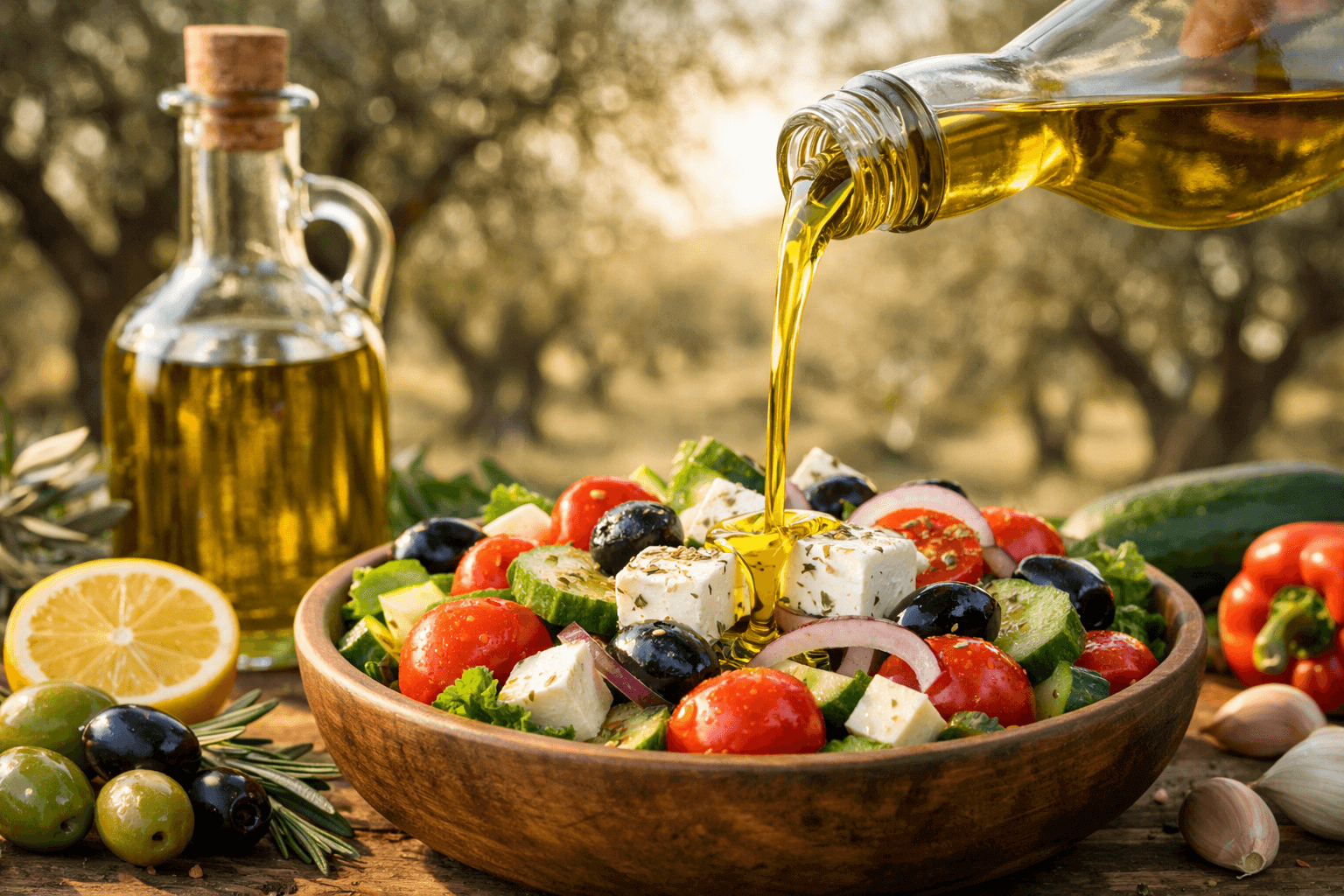
Raw Use (Ideal)
salads
vegetables
whole grains
yogurt-based sauces
Cooking
Extra virgin olive oil is more heat-stable than many people believe, due to its antioxidant content.
It is safe for:
light sautéing
moderate-temperature cooking
Avoid deep frying or prolonged high heat, which degrades valuable compounds.
Who Should Be Careful
Although extremely healthy, olive oil is calorie-dense.
People who should moderate intake:
individuals actively losing weight
those with specific fat-restricted medical conditions
As with all foods, balance matters more than extremes.
The Bottom Line
Extra virgin olive oil is one of the rare foods that combines:
ancient tradition
modern scientific validation
daily practicality
It supports the heart, protects the brain, reduces inflammation, and contributes to long-term vitality — especially after midlife.
Used correctly, it is not just food.
It is preventive nutrition.