Nutrition After Fifty: What Your Body Really Needs to Stay Strong and Healthy

After the age of fifty, nutrition stops being a simple matter of calories and weight.
Your body changes in quiet but important ways. Muscles respond differently to food. Energy drops faster. Blood sugar becomes more sensitive. And nutrients that once seemed optional suddenly matter much more.
This doesn’t mean decline is inevitable.
It means nutrition needs to become smarter, not stricter.
With the right approach, food can support strength, mental clarity, mobility, and long-term health well beyond midlife. This guide explains what truly changes after fifty—and how to eat in a way that works with your body, not against it.
What Changes in the Body After Fifty
Many people are surprised to learn that the biggest changes after fifty are not dramatic—but cumulative.
First, metabolism slows slightly. This does not mean your body stops burning energy, but it becomes less forgiving of poor food choices.
Second, muscle protein synthesis declines. In simple terms, your muscles don’t rebuild as efficiently as they used to. This is one of the main reasons age-related muscle loss, known as sarcopenia, begins quietly in midlife.
Third, insulin sensitivity often decreases. Carbohydrates that once caused no issues may now lead to energy crashes, fat gain, or blood sugar swings.
Finally, nutrient absorption changes. The digestive system becomes less efficient at absorbing certain vitamins and minerals, especially vitamin D, magnesium, and B vitamins.
None of these changes are a crisis. But ignoring them leads to fatigue, weakness, and frustration. Understanding them gives you control.
Protein Needs After Fifty: Why It Matters More Than Ever
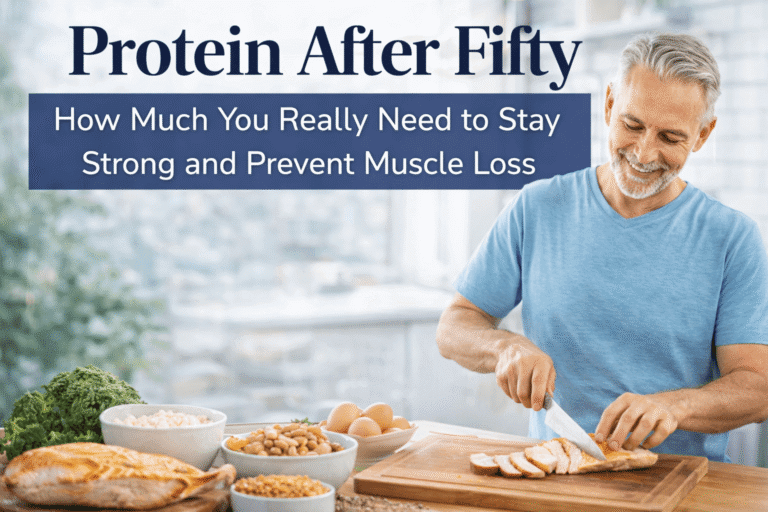
Protein is no longer just about muscle building. After fifty, it becomes a protective nutrient.
As we age, the body becomes less responsive to small protein doses. That means eating “a little protein here and there” is often not enough to preserve muscle mass.
Adequate protein intake supports:
muscle strength and balance
immune function
bone health
recovery from illness or injury
Both animal and plant proteins can be useful. Fish, eggs, yogurt, poultry, beans, and legumes all play a role. What matters most is consistency across the day, not just one high-protein meal.
Spreading protein intake across meals helps the body use it more effectively. This is especially important for maintaining leg strength and mobility later in life.
Carbohydrates After Fifty: Friend or Enemy?
Carbohydrates are often blamed for weight gain and fatigue, but the real issue is quality, not existence.
After fifty, the body handles refined carbohydrates poorly. White bread, sweets, and sugary drinks spike blood sugar quickly and are followed by crashes in energy and focus.
On the other hand, complex carbohydrates—such as vegetables, legumes, whole grains, and fruit—provide steady energy, fiber, and nutrients.
The goal is not elimination, but selection and timing:
choose carbohydrates with fiber
pair them with protein or healthy fats
avoid large carbohydrate-heavy meals late at night
When used wisely, carbohydrates support brain function, digestion, and daily movement rather than undermining them.
Healthy Fats That Support Heart and Brain Health
Fats have been misunderstood for decades. After fifty, the right fats become essential allies.
Certain fats support:
cardiovascular health
brain function and memory
inflammation control
hormone balance
Particularly valuable are omega-three fatty acids, found in fatty fish and some plant sources. These fats are linked to improved circulation and cognitive health.
Olive oil also plays a central role. Used consistently, it supports heart health and reduces chronic inflammation without stressing the digestive system.
The goal is balance—not fear. Eliminating fat entirely can do more harm than good, especially for brain and hormone health.
Micronutrients Commonly Missing After Fifty
Calories alone do not equal nourishment. Many adults over fifty consume enough food but remain undernourished in key micronutrients.
Some of the most commonly missing include:
Vitamin D
Important for bone strength, immune defense, and muscle function. Deficiency is widespread, especially in people with limited sun exposure.
Magnesium
Supports muscle relaxation, sleep quality, and nerve function. Low levels may contribute to cramps, fatigue, and poor sleep.
B Vitamins
Essential for energy production and brain health. Absorption often declines with age.
Zinc
Plays a role in immune response and wound healing.
A nutrient-dense diet helps, but awareness is crucial. Many symptoms associated with “getting older” are actually signs of micronutrient insufficiency.
Simple Nutrition Habits That Make a Big Difference
Healthy nutrition after fifty does not require perfection. It requires patterns.
Small habits create long-term results:
eating regular meals instead of skipping
drinking enough water throughout the day
avoiding heavy meals late at night
focusing on consistency rather than strict rules
One of the most powerful shifts is moving away from extreme dieting toward sustainable routines. The body responds better to stability than to constant restriction.
Putting It All Together
Nutrition after fifty is not about chasing youth. It is about protecting strength, independence, and clarity.
The body is still adaptable. Muscles still respond. The brain still benefits from good fuel. And small nutritional improvements compound over time.
When food choices align with how the body actually works at this stage of life, energy improves, recovery becomes easier, and health feels more manageable—not more complicated.
This is not a temporary diet.
It is a long-term strategy for staying strong and healthy well into later life.