
How to Increase Deep Sleep Naturally: 9 Science-Backed Tips
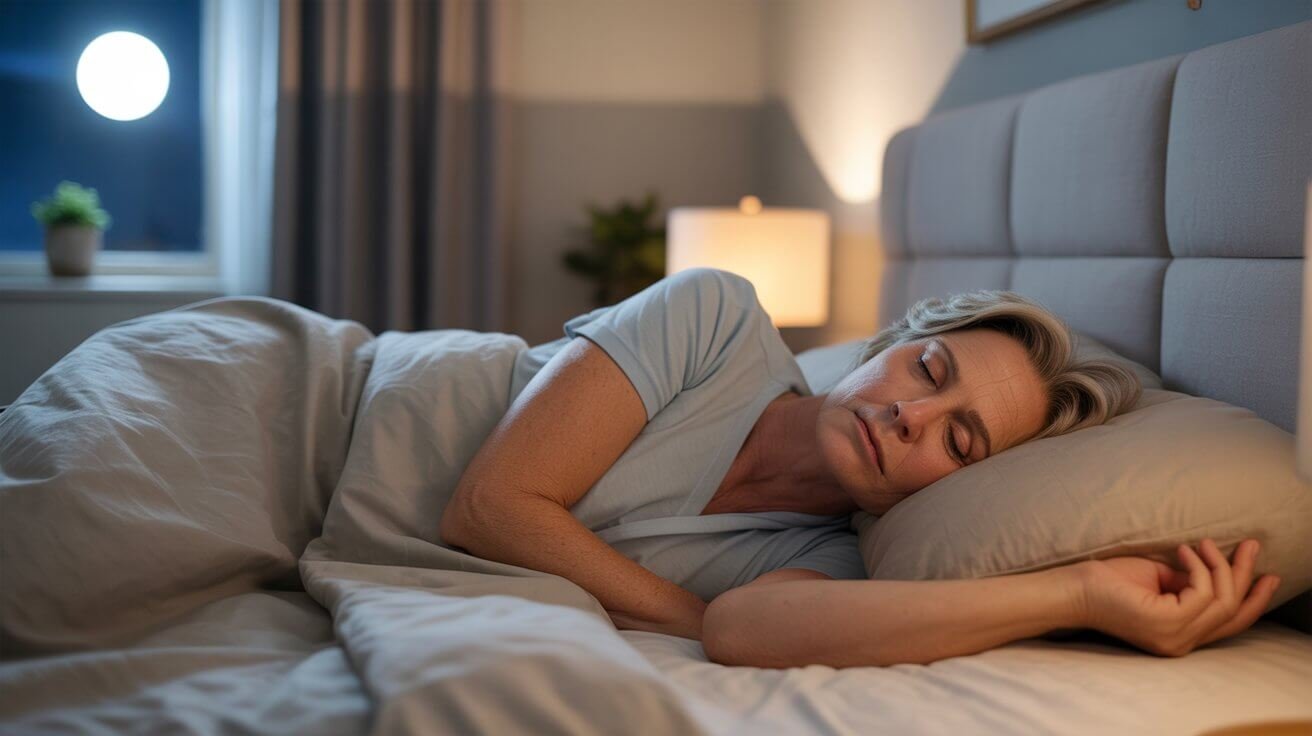
How to increase deep sleep naturally is one of the most practical questions you can ask for long-term recovery, energy, and healthy aging. Deep sleep (also called slow-wave sleep, or stage N3) is the part of the night when your brain and body shift into a quieter “repair mode.” Breathing and heart rate slow down, the nervous system calms, and the body prioritizes tissue maintenance and immune regulation. When deep sleep is consistently low, many people notice it first as subtle changes: heavier fatigue in the morning, less stable mood, slower workout recovery, stronger evening cravings, and a feeling that sleep “wasn’t restorative,” even if total hours looked fine.
In modern life, deep sleep is commonly squeezed by stress load, late-night light exposure, irregular timing, alcohol close to bedtime, untreated sleep apnea, and even the way we structure our day (too little daylight, too much sitting, too late caffeine). The good news is that deep sleep is not just “luck.” It is strongly influenced by physiology and environment, which means there are evidence-based levers you can pull. In this guide, you’ll learn what deep sleep is, why it matters, and which factors most reliably support it, without hype and without unrealistic promises.
key highlights
- why deep sleep is the “repair mode” your body needs
- what deep sleep is (and why it changes with age)
- the biology of deep sleep: brain waves, hormones, and recovery
- what research links to deep sleep: heart, brain, immunity, aging
- how to increase deep sleep naturally (the practical playbook)
- who should be careful: red flags and when to get evaluated
- frequently asked questions (quick, snippet-ready answers)
- final takeaway
why deep sleep is the “repair mode” your body needs

Sleep is not one uniform state. Your brain moves through repeating cycles of non-REM (NREM) and REM sleep across the night. Deep sleep sits inside the NREM portion, specifically stage N3. According to the U.S. National Heart, Lung, and Blood Institute (νάσιοναλ χαρτ, λανγκ, εντ μπλαντ ινστιτιούτ), deep sleep is the stage most concentrated in the first part of the night, and it is identified by a distinct pattern in brain activity. NHLBI: sleep stages.
What makes deep sleep special is not just that it feels “deeper.” It is a physiological state where the balance of your autonomic nervous system shifts toward parasympathetic dominance (the “rest-and-digest” side). In practical terms, deep sleep is strongly associated with physical restoration: the body lowers heart rate and blood pressure, relaxes skeletal muscle tone, and supports repair processes.
For a site focused on healthy aging, deep sleep matters because it is tightly connected to recovery capacity. If you’re building strength, trying to protect balance, or aiming to keep inflammation and blood pressure stable, sleep quality becomes a “hidden multiplier.” (If you’re also working on daily movement, you may find it helpful to pair this with our walking-focused content: walking & daily movement.)
what deep sleep is (and why it changes with age)
Deep sleep is also called slow-wave sleep because the brain produces large, slow oscillations (delta waves). In common sleep staging, deep sleep corresponds primarily to NREM stage 3 (N3). The Cleveland Clinic explains that stage 3 is a “very deep sleep stage” where the body takes advantage of the period to repair injuries and reinforce immune function. Cleveland Clinic: sleep basics.
Two points are important for readers over forty or fifty:
- deep sleep tends to decline with age. Many adults notice that they fall asleep lighter, wake more easily, and feel less “knocked out” than they did in their twenties. This doesn’t mean deep sleep is gone, but the brain’s ability to sustain long slow waves often decreases.
- timing matters as much as total hours. Deep sleep is usually front-loaded earlier in the night. If bedtime is pushed late, or sleep is fragmented early (stress, alcohol, late meals, apnea), deep sleep can be reduced even if you “sleep in” later.
One common misunderstanding comes from wearables. Wrist trackers can be useful for trends, but they estimate sleep stages indirectly (movement and heart signals), not with clinical-grade brain-wave measurements. If you want a medically accurate breakdown of sleep stages, that’s done with polysomnography, which uses signals like EEG to measure brain activity. Mayo Clinic: polysomnography.
If your “deep sleep score” is low but you feel refreshed, it may be less meaningful. If your score is low and you also have symptoms (snoring, gasping, morning headaches, daytime sleepiness), it becomes more clinically relevant.
the biology of deep sleep: brain waves, hormones, and recovery
Deep sleep is a whole-body state. A few mechanisms are worth understanding because they directly guide what works (and what doesn’t) when you try to improve it.
slow waves, nervous system downshift, and “lower noise” physiology
During N3, the brain shows high-amplitude delta activity, and the body runs at a calmer baseline: slower breathing, reduced sympathetic output, and a lower arousal threshold. This matters because deep sleep is easiest to break when the brain is “hyper-alert,” which is why stress and late-night stimulation can steal it.
growth hormone pulses and physical restoration
Classic sleep physiology research shows that human growth hormone release during sleep is closely linked to slow-wave sleep. The practical implication is not bodybuilding hype. It is tissue maintenance: muscles, connective tissue, and overall recovery processes tend to align with deep-sleep-rich periods.
brain housekeeping and the glymphatic concept
Deep NREM sleep is increasingly discussed in relation to the brain’s clearance dynamics. Scientific reviews describe how sleep, especially NREM patterns, is associated with cerebrospinal fluid flow and metabolic waste clearance pathways (often discussed under the “glymphatic” umbrella). This is an active research area, but it supports a simple practical message: fragmented sleep is rarely “neutral” for long-term brain health.
metabolic stability: glucose regulation and appetite signaling
Reduced slow-wave sleep has been linked in research to less favorable glucose regulation and insulin sensitivity. Again, this does not mean one bad night “causes diabetes.” It suggests that chronic patterns of short, disrupted, or low-quality sleep can stack the odds toward metabolic strain, especially in midlife. If you’re building longevity habits, pair sleep work with consistent daily routines (see: small lifestyle changes).
what research links to deep sleep: heart, brain, immunity, aging
Deep sleep is not a magic switch, but research consistently associates healthy sleep architecture with better function across major systems. Here are the most relevant benefit domains, explained in a clinically cautious way.
heart health
Deep sleep is the stage where cardiovascular workload tends to dip: heart rate slows, blood pressure reduces, and the body gets a nightly “recovery window.” The most actionable takeaway is simple: stable sleep timing and fewer night disruptions usually help the heart more than chasing supplements.
brain and cognitive function
Harvard Health describes stage 3 (deep sleep) as a phase where breathing and heart rate slow, blood pressure drops, muscles relax, and the body releases essential hormones. Harvard Health: sleep stages and memory. In real life, people often notice the cognitive cost of poor sleep as slower recall, more “tip-of-the-tongue” moments, and reduced emotional resilience.
immune system
Sleep is tightly connected to immune signaling and inflammatory balance. Deep sleep, as the most physiologically “downshifted” state, is often discussed as a recovery stage that supports immune maintenance. If you frequently get sick, sleep fragmentation is worth treating as a serious variable, not an afterthought.
longevity and healthy aging
For adults over forty, the goal is not to chase a perfect sleep score. It is to build a repeatable pattern that protects deep sleep opportunities: consistent timing, low evening stress load, and treating disruptors like sleep apnea. If insomnia is part of your story, start with our pillar content here: insomnia.
how to increase deep sleep naturally (the practical playbook)
Deep sleep responds best to a small set of high-leverage habits that stabilize your circadian rhythm, reduce nighttime arousals, and support normal thermoregulation. You don’t need perfection. You need consistency.
one: anchor your wake time (this is the “master switch”)
If you want deeper sleep, start with a consistent wake time most days of the week. A stable wake time strengthens your circadian rhythm and helps your brain “predict” when nighttime should begin, which can improve sleep continuity and the chances of getting deep sleep earlier in the night. The U.S. Centers for Disease Control and Prevention (σι ντι σι) includes consistent bed and wake times among the core behaviors that support better sleep. CDC: about sleep.
- best practice: choose a wake time you can keep within about thirty to sixty minutes most days.
- why it helps deep sleep: deep sleep is usually front-loaded. When timing is stable, your first cycles are more predictable and often more restorative.
two: get bright outdoor light early, dim light late
Your brain uses light as the strongest cue for circadian timing. Morning daylight helps set your internal clock, while bright light at night pushes it later and may make sleep lighter.
- morning: get ten to twenty minutes of outdoor light within the first hour of waking (longer if it’s cloudy).
- evening: keep lights dimmer in the last hour before bed and reduce screen brightness. If you must use a screen, consider warmer color settings.
three: make the bedroom cooler than your living space
Thermoregulation is one of the simplest ways to support deeper sleep. As you fall asleep, your core body temperature naturally drops. A cooler room makes that drop easier. Sleep Foundation notes that many people sleep best with a bedroom temperature around the mid-sixties Fahrenheit (roughly eighteen to twenty degrees Celsius), though individual preference matters. Sleep Foundation: best temperature for sleep.
- target range: about sixty-five to sixty-eight degrees Fahrenheit (about eighteen to twenty degrees Celsius), then adjust to comfort.
- bonus tactic: a warm shower one to two hours before bed can help you cool down afterward.
- if you’re older: avoid making the room uncomfortably cold; comfort and safety win.
four: exercise helps, but timing matters for some people
Regular activity tends to improve sleep quality over time, and strength training is especially relevant for healthy aging. However, intense workouts too close to bedtime can keep some people physiologically “wired.” If you notice that evening training makes you fall asleep later or wake more, move harder sessions earlier.
- simple rule: place vigorous workouts earlier in the day when possible; keep late evenings for gentle movement, mobility, or a short walk.
- pairing idea: daily walking supports sleep pressure and also reinforces circadian timing (see: walking & daily movement).
five: caffeine cutoff is non-negotiable if you want deeper sleep
Caffeine can reduce sleep quality even when it doesn’t “feel” stimulating. A well-cited clinical study found caffeine consumed six hours before bedtime still significantly disrupted sleep. Drake et al.: caffeine 0, 3, or 6 hours before bed (PMC). The American Academy of Sleep Medicine (έι έι ές έμ) also highlights that caffeine six hours before bed can meaningfully disturb sleep. AASM: caffeine timing.
- minimum cutoff: six hours before bed.
- better for sensitive sleepers: eight to ten hours before bed.
- watch hidden sources: pre-workouts, “energy” drinks, strong tea, chocolate, and some pain medicines.
six: alcohol may knock you out, but it often breaks the second half of the night
Alcohol can shorten sleep onset for some people, but research reviews show it is associated with poorer sleep quality and more fragmented sleep, especially later in the night. Park et al.: effects of alcohol on sleep quality (PMC). Experimental work also shows alcohol can shift sleep architecture across the night, with more disruption later. Chan et al.: alcohol and sleep architecture (PMC).
- deep-sleep-friendly guideline: if you drink, keep it moderate and finish earlier in the evening, not near bedtime.
- especially important if you snore: alcohol can worsen airway collapse and make sleep apnea more likely.
seven: protect the first half of the night
Because deep sleep tends to be concentrated earlier, the first three to four hours after sleep onset are a “golden window.” The biggest deep-sleep thieves in this window are: late heavy meals, alcohol, overheating, and stress-driven awakenings. The CDC specifically lists avoiding large meals and alcohol before bed as part of healthy sleep habits. CDC: better sleep habits.
- dinner timing: finish the main meal about two to three hours before bed.
- if you need a snack: keep it light and predictable, especially if reflux is an issue.
eight: build a “downshift routine” for your nervous system
Deep sleep is more likely when your pre-sleep state is calm and predictable. Think of the last thirty to sixty minutes as a gentle runway into sleep: dim lights, quieter environment, low-stimulation activities, and getting tomorrow’s plan out of your head and onto paper.
If you have insomnia patterns (long sleep onset, frequent awakenings, worry about sleep), the most evidence-based approach is cognitive behavioral therapy for insomnia (cbt-i), not supplements. If that’s you, start here: insomnia.
nine: consider supplements only after the basics (and with caution)
Supplements may help specific people, but they’re rarely stronger than the “big levers” above. Use one at a time, low dose, and stop if you feel worse. If you take sedatives, sleep medications, antidepressants, blood pressure drugs, or have epilepsy, bipolar disorder, pregnancy, or autoimmune conditions, discuss supplements with a clinician first.
who should be careful (safety, red flags, and when to get evaluated)
Sometimes “low deep sleep” isn’t a lifestyle issue. It’s a breathing, movement, pain, or medication issue that needs proper evaluation. Red flags include: loud snoring or gasping, morning headaches, strong daytime sleepiness, restless legs symptoms, frequent awakenings from reflux or pain, or ongoing insomnia with daytime impairment.
If you suspect a sleep disorder, the clinically accurate way to measure sleep stages is a sleep study (polysomnography). Mayo Clinic explains that polysomnography records brain waves, oxygen levels, breathing, heart rate, and movements during sleep. Mayo Clinic: polysomnography.
frequently asked questions
how much deep sleep do you need?
snippet answer (forty to fifty words): Most adults don’t need to “hit a perfect deep sleep number” each night. Deep sleep usually makes up a smaller portion of total sleep than light sleep, and it tends to occur more in the first half of the night. Consistency matters more than a single-night score.
Sleep architecture varies by age, genetics, stress load, and health. If you feel refreshed and function well, focus on stable habits rather than chasing a number. NHLBI: stages of sleep.
why does my smartwatch say i have very little deep sleep?
snippet answer (forty to fifty words): Wearables estimate deep sleep using movement and heart-related signals, not direct brain-wave measurement. They’re better for tracking trends over time than diagnosing a problem. If your score is low but you feel fine, it may not reflect true sleep stages.
Clinical staging uses polysomnography. If low scores match symptoms like snoring, gasping, or heavy sleepiness, consider evaluation. Mayo Clinic: polysomnography.
does caffeine reduce deep sleep even if i drink it “early”?
snippet answer (forty to fifty words): Yes. Caffeine can disrupt sleep even when taken earlier than you expect. Research shows caffeine consumed six hours before bedtime can still significantly disrupt sleep quality and reduce total sleep time. A strict caffeine cutoff is one of the most reliable deep-sleep-supporting changes.
Use at least a six-hour cutoff, and consider eight to ten hours if you’re sensitive. Caffeine timing study (PMC).
does alcohol help or hurt deep sleep?
snippet answer (forty to fifty words): Alcohol may make you feel sleepy at first, but it often harms overall sleep quality by increasing fragmentation later in the night. Many people wake more and feel less restored when alcohol is consumed close to bedtime. For recovery-focused sleep, earlier and less is better.
Alcohol can also worsen snoring and sleep apnea risk. Alcohol and sleep quality review (PMC).
what is the best room temperature for deep sleep?
snippet answer (forty to fifty words): A slightly cool bedroom generally supports sleep because your body temperature naturally drops at night. Many people do well around sixty-five to sixty-eight degrees Fahrenheit (about eighteen to twenty degrees Celsius), then adjust based on comfort. Overheating is a common cause of lighter sleep.
Experiment within a small range and prioritize comfort and safety. Sleep Foundation: best temperature for sleep.
final takeaway
If you want to increase deep sleep naturally, don’t start with supplements or sleep trackers. Start with the fundamentals that most reliably shape sleep architecture: a consistent wake time, morning daylight, dim evenings, a cooler bedroom, earlier caffeine cutoff, and limiting alcohol near bedtime. Then protect the first half of the night with sensible dinner timing and a calming wind-down routine.
Finally, treat “deep sleep problems” seriously when there are red flags like snoring, gasping, morning headaches, or heavy daytime sleepiness. In those cases, the fastest path to better sleep may be diagnosing and treating an underlying sleep disorder, not adding more hacks.