
Walking & Daily Movement: Mobility Boost After 40

Walking and daily movement is the simplest “strength habit” most people underestimate—because it doesn’t look like exercise. Yet a consistent walking routine can support stronger legs, steadier balance, healthier circulation, and better day-to-day energy, especially after forty when long sitting and stiff joints start to feel more “normal.”
Here’s the key: walking is not just steps. It’s a repeating pattern of single-leg balance, ankle mobility, hip control, posture, and gentle cardiovascular work. Done regularly (and done well), it can become the foundation that makes everything else easier—stairs, getting up from a chair, carrying groceries, even keeping workouts safer when you do choose to add strength training.
In this guide, you’ll learn what counts as meaningful daily movement, why pace matters more than perfection, how to walk in a joint-friendly way, and how to build a plan that fits real life. We’ll keep it evidence-informed and practical, without exaggerated promises.
walking is the most underrated mobility tool you already own
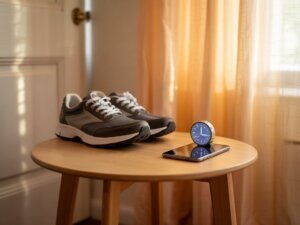
Many people think “strength” is something you do in a gym. But in daily life, strength is often the ability to:
- stand up without using your hands
- walk confidently on uneven ground
- climb stairs without feeling unstable
- recover quickly from a small trip or misstep
Walking trains pieces of all of these—because every step is a mini single-leg stance. Your ankles stabilize. Your hips keep the pelvis level. Your trunk resists wobbling. Over time, consistent walking can help preserve this “movement reserve,” which is what makes aging feel steady rather than fragile.
If you’re also working on reducing long sitting hours, walking becomes even more powerful as a daily reset. You may want to pair this with our guide on harmful habits that quietly weaken mobility over time.
what counts as “daily movement” (and why it matters)
Daily movement isn’t only formal exercise. It’s the total amount you move across the day: walks, errands, household tasks, stair climbs, and short “movement snacks.” Public health guidance consistently encourages older adults to be active regularly and combine aerobic activity with muscle strengthening and balance-focused work across the week.
For example, the CDC’s older-adult activity overview includes aerobic activity, muscle strengthening, and balance activities as key pieces for adults sixty-five and older. CDC older adult activity overview
The World Health Organization also highlights weekly activity targets and notes that adults with poorer mobility should include activity that enhances balance and helps prevent falls. WHO physical activity guidance
Those recommendations aren’t meant to stress you out. They’re a compass. The bigger point is that consistent movement supports healthier function over time, and walking is usually the most accessible way to start.
why walking supports muscle strength and mobility (the simple mechanism)
Walking is not heavy lifting, but it can still support functional strength and mobility through a few key pathways:
it rehearses balance and single-leg control
Every step requires brief stability on one leg. Over time, this can help maintain coordination and confidence—especially if you include varied walking (turns, gentle hills, different surfaces).
it keeps ankles and hips “usable”
Stiff ankles and tight hips are common after years of sitting. Walking repeatedly takes your joints through a natural range of motion, helping maintain mobility that supports safer stairs and steadier gait.
it supports circulation and recovery
Walking is also a low-impact way to increase blood flow, which many people find helps with stiffness and general recovery—especially when paired with good sleep and hydration.
If your sleep is inconsistent, your walking habit can still help—but better sleep often makes movement feel easier. You can support this with our practical guide to nighttime habits.
pace matters more than steps (the “brisk walk” concept)
Step counts can be motivating, but they’re not the whole story. What often makes walking “count” physiologically is intensity—commonly described as a pace that makes you breathe a little heavier while still being able to speak in short sentences.
One practical way to estimate this is the “talk test.” The NHS describes brisk walking as a pace where you can still talk, but you cannot sing. NHS walking for health
That doesn’t mean you must walk fast all the time. It means it’s useful to have a mix:
- easy walks for consistency and joint friendliness
- brisk segments for a stronger cardiovascular and metabolic signal
- short “movement snacks” to break up long sitting blocks
This mix tends to be more sustainable than chasing a single daily number.
how to walk with better form (without overthinking it)
Good walking form is not about perfection. It’s about avoiding the common patterns that increase discomfort or reduce the training effect.
posture: tall, relaxed, stacked
Think “head tall, ribs down, shoulders relaxed.” Avoid excessive forward head posture. A slightly quicker cadence often reduces overstriding and feels kinder to joints.
foot strike: avoid overstriding
Overstriding (landing far in front of your body) can feel harder on knees and hips. Aim to land closer under your center of mass with controlled steps.
arms: let them help
Natural arm swing improves rhythm and stability. You don’t need dramatic pumping—just avoid rigid arms that make your gait stiff.
terrain: choose smart variety
Flat ground is great for consistency. Gentle inclines can add a “strength” effect for glutes and calves. Uneven ground can improve coordination—but only when you feel stable and alert.
the “minimum effective dose” for walking and daily movement
If you want an approach that almost always works, start small and build. A simple baseline many adults can tolerate is:
- ten minutes of walking most days
- plus one or two extra five-minute movement breaks on busy days
This may sound too modest, but it’s extremely repeatable—and repeatability is the real secret. Once this is stable, you build it into a stronger plan with brisk segments, weekly structure, and simple strength add-ons.
For the lifestyle side of consistency (how to actually keep the habit), our guide to small lifestyle changes can help you set up a system rather than relying on motivation.
the four-week walking plan (simple, progressive, and joint-friendly)
This plan is built for real life. It assumes you have busy days, uneven motivation, and joints that sometimes feel stiff. You’ll walk most days, but the structure stays gentle and scalable.
Weekly goal: build consistency first, then add a little intensity through short brisk intervals. If you’re starting from low activity, begin with the smallest version and build.
your weekly structure
- three “planned walks” (structured pace or intervals)
- two “easy walks” (comfort pace)
- daily movement snacks (short breaks that reduce long sitting)
the “talk test” for intensity (the simplest guide)
For brisk walking, aim for a pace where you can still talk, but singing would feel hard.
week one: build the habit (no pressure, just reps)
planned walk (three days)
- five minutes easy warm-up
- six minutes brisk (or slightly faster than normal)
- four minutes easy cool-down
easy walk (two days)
- ten to fifteen minutes at a comfortable pace
movement snacks (most days)
- two to three times per day: two to five minutes of easy walking around the house or outside
week two: add time (your joints adapt through repetition)
planned walk (three days)
- five minutes easy
- two rounds of: four minutes brisk + two minutes easy
- four minutes easy
easy walk (two days)
- fifteen to twenty minutes comfortable
week three: add “strength” through gentle hills or cadence
Choose one option based on your environment and joints.
option a: gentle hill day (one planned walk)
- five minutes easy
- six rounds: one minute uphill (or slight incline) + one to two minutes easy
- five minutes easy
option b: flat cadence day (one planned walk)
- five minutes easy
- eight rounds: thirty seconds brisk + ninety seconds easy
- five minutes easy
the other two planned walks
- repeat week two’s structure, or keep it simpler if needed
easy walks
- fifteen to twenty-five minutes comfortable
week four: make it more “real life” (without making it risky)
planned walk (two days)
- five minutes easy
- three rounds: five minutes brisk + two minutes easy
- five minutes easy
skills walk (one day)
- ten to twenty minutes easy
- every two minutes: do a gentle direction change (turn, loop, or figure-eight) and return to normal walking
easy walks
- fifteen to twenty-five minutes comfortable
After week four: repeat the plan with slightly longer brisk segments, or keep the same plan and focus on consistency.
indoor options that still count (treadmill and “hallway loops”)
treadmill walking
- use a slight incline only if it feels joint-friendly
- avoid holding the rails tightly (light touch is fine)
- use the same interval structure as outdoors
at-home walking loops
- set a timer for five to ten minutes
- walk through your safest clear path (hallway, living room loop)
- use a brisk minute followed by an easy minute
add-ons that make walking more effective (without turning it into a workout program)
two-minute calf and ankle support (after walks)
- calf raises: one set of ten to fifteen reps (supported)
- ankle rocks: ten slow reps each side
two-minute hip support (three days per week)
- glute bridge: one set of eight to twelve reps
- side steps: ten steps each way (band optional)
who should be careful
Walking is generally safe and adaptable, but extra caution is wise if you have chest pain with activity, frequent dizziness or fainting, new neurological symptoms, severe foot pain, rapidly worsening joint pain, recent falls, or strong fear of falling.
frequently asked questions (evidence-based)
should i focus on steps or minutes?
Minutes are often more reliable because they capture intensity and consistency. Steps can be motivating, but they’re not the whole story.
is brisk walking necessary?
Easy walking is excellent for consistency. Brisk segments add a stronger training signal. Most people do best with a mix.
is treadmill walking as good as outdoor walking?
It can be. Treadmills support consistency. Outdoor walking adds natural variety. Choose what keeps you consistent.
final takeaway
Walking and daily movement is one of the simplest, most sustainable ways to support mobility after forty—because it’s repeatable. Walk most days, keep some walks easy, add short brisk segments a few times per week, and break up long sitting with short movement snacks.
Educational note: This content is for general information and does not replace medical advice. If you have concerning symptoms during walking, frequent dizziness, recent falls, or rapidly worsening pain, consider professional guidance before progressing intensity.