
The 10-3-2-1-0 Sleep Method: A Doctor-Reviewed Guide to Deep Sleep
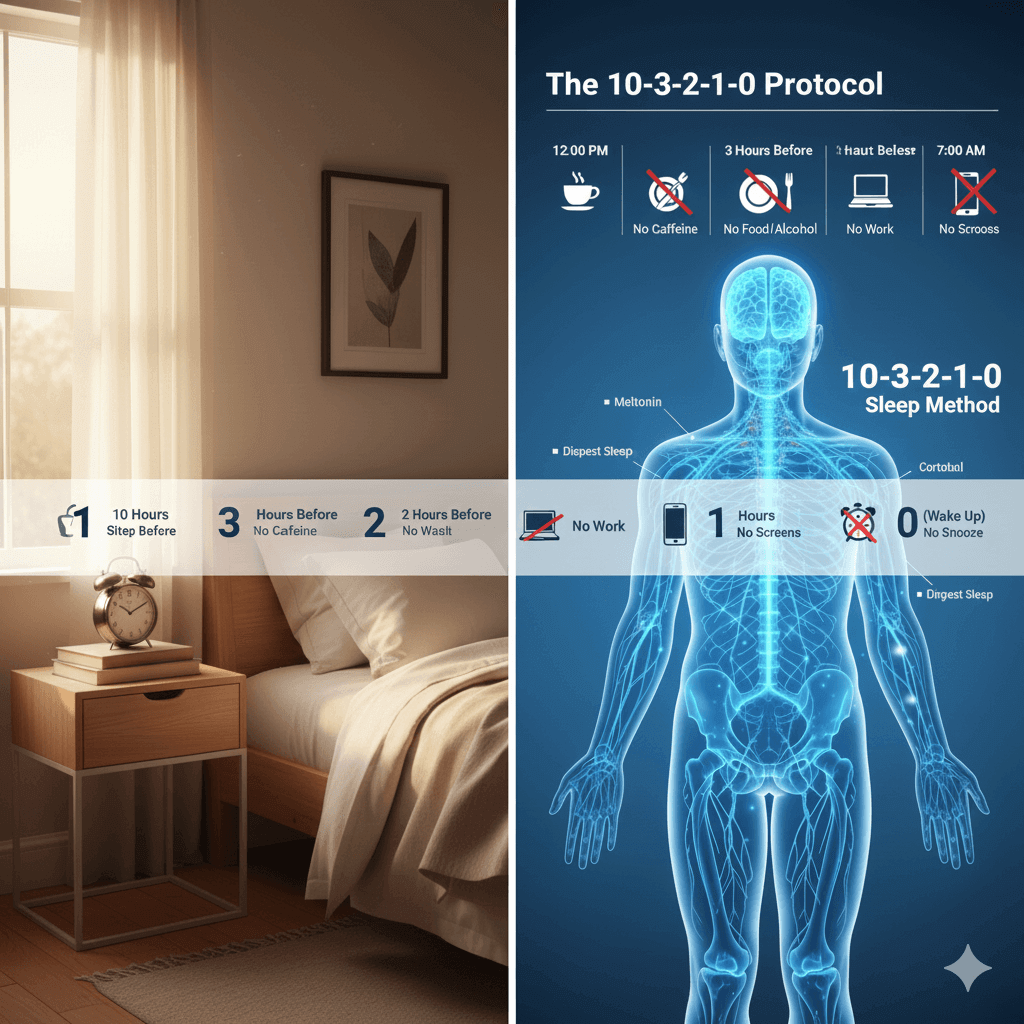
Sleep hygiene often feels like a vague concept, leading many to rely on supplements rather than behavioral changes. However, current clinical evidence suggests that structured pre-sleep routines are the most effective non-pharmacological intervention for insomnia. Enter the 10-3-2-1-0 Sleep Method.
This numerical protocol is not merely a productivity hack; it is a physiological countdown designed to align your behavior with your circadian rhythm. By systematically reducing stimulants, digestive load, cognitive stress, and blue light exposure, this method prepares the body for the secretion of melatonin and the reduction of cortisol, facilitating deep, restorative sleep.
🔥 Expert Summary: The 10-3-2-1-0 Protocol
- Systematic De-escalation: A structured countdown that tackles the four main disruptors of sleep: caffeine, digestion, work stress, and blue light.
- Hormonal Alignment: Helps lower cortisol (stress hormone) and boost adenosine (sleep pressure) naturally before bed.
- Sleep Inertia Prevention: The final step (0) specifically targets morning grogginess to improve wakefulness.
Table of Contents
What Is the 10-3-2-1-0 Method?
The 10-3-2-1-0 Sleep Method is a behavioral framework popularized by fitness coach Craig Ballantyne, designed to fix your sleep cycle by working backward from your bedtime. Unlike generic advice to “relax,” this method provides quantifiable cut-off points for daily habits.
Biologically, it addresses the homeostatic sleep drive. Your body builds up “sleep pressure” (via a chemical called adenosine) throughout the day. Modern habits—like late-night snacking or checking emails—artificially suppress this pressure. This method systematically removes those barriers, allowing your natural sleep-wake cycle to take over.
[INSERT INFOGRAPHIC: A timeline visualization of a day starting at 7 AM and ending at 10 PM, showing the cut-off points for Coffee, Food, Work, and Screens]
Biological Breakdown: The 5 Steps
To understand why this method works, we must look at the biochemistry behind each number. Below is the physiological impact of adhering to each step.
| Number | The Rule | Biological Mechanism |
|---|---|---|
| 10 | Hours before bed: No Caffeine | Allows for adenosine receptor clearance. Caffeine has a half-life of 5–7 hours; stopping early prevents it from blocking deep sleep signals. |
| 3 | Hours before bed: No Food/Alcohol | Prevents post-prandial thermogenesis (body heating up to digest) and stabilizes insulin levels, allowing core body temperature to drop for sleep onset. |
| 2 | Hours before bed: No Work | Reduces psychological arousal and cortisol spikes associated with problem-solving or stress, shifting the brain from Beta waves (active) to Alpha waves (relaxed). |
| 1 | Hour before bed: No Screens | Eliminates blue light exposure (460-480nm spectrum), which suppresses melatonin production in the pineal gland. |
| 0 | Times you hit Snooze | Prevents sleep inertia (fragmented sleep). Returning to sleep after an alarm starts a new sleep cycle that you cannot finish, leading to grogginess. |
Scientifically Proven Health Benefits
Adopting the 10-3-2-1-0 method does more than just help you close your eyes. By respecting the body’s biochemistry, you unlock several downstream health benefits.
Enhanced Deep Sleep & Glymphatic Drainage
By cutting alcohol and food 3 hours before bed, you allow the body to reach Deep NREM (Stage 3) sleep faster. This is the stage where the glymphatic system cleanses the brain of neurotoxins, including beta-amyloid plaques. Studies indicate that late-night digestion diverts energy away from this critical repair process.
Cortisol Regulation & Mental Health
The “2 hours no work” rule is critical for disconnecting the sympathetic nervous system (fight or flight). Chronic evening stress keeps cortisol elevated, which is inversely related to melatonin. Lowering cortisol in the evening is essential for managing anxiety and preventing metabolic syndrome.
Bioavailability & Practical Implementation
Knowing the rules is simple; sticking to them requires strategy. Here is how to optimize the method for real-life application.
| Protocol Step | Common Challenge | Optimization Strategy |
|---|---|---|
| 10 Hours (Caffeine) | Mid-afternoon slump. | Switch to decaf or herbal tea. Use hydration and light movement to boost energy instead of stimulants. |
| 3 Hours (Food) | Late-night hunger pangs. | Ensure your dinner contains sufficient protein and fiber to maintain satiety. If necessary, a small amount of glycine-rich bone broth is permissible. |
| 1 Hour (Screens) | Boredom or anxiety. | Replace scrolling with reading physical books, journaling, or listening to non-stimulating audiobooks/podcasts. |
Safety, Side Effects & Contraindications
While the 10-3-2-1-0 method is behavioral and generally safe, strict adherence may not be suitable for everyone.
- Hypoglycemia / Diabetes: Individuals who struggle with blood sugar regulation may find the 3-hour fasting window before bed difficult. Consult a healthcare provider; a small, protein-based snack may be required.
- Shift Workers: This schedule assumes a typical night-sleep pattern. Shift workers should adapt the intervals (e.g., no caffeine 10 hours before their sleep time) rather than the specific clock times.
- Eating Disorders: Rigid rules around food timing can trigger restrictive behaviors in susceptible individuals.
Frequently Asked Questions
Does the 10-3-2-1-0 method work for shift workers?
Yes, shift workers can utilize this method by applying the time intervals relative to their specific sleep schedule rather than the time of day. For example, if you sleep at 8:00 AM, your caffeine cut-off would be 10:00 PM the previous night. The biological principle of adenosine clearance remains the same regardless of the sun’s position.
Can I drink water during the 3-hour fasting window?
Yes, water and non-caloric herbal teas (like chamomile or valerian root) are permitted and encouraged for hydration. However, try to taper off fluid intake 60–90 minutes before bed to prevent nocturia (waking up to urinate), which disrupts deep sleep cycles.
Why is hitting the snooze button (The “0”) so bad for you?
Hitting snooze fragments your sleep architecture, tricking your brain into starting a new sleep cycle that you won’t have time to finish. This results in severe “sleep inertia”—a state of grogginess and cognitive impairment that can last for up to 4 hours after waking. It is biologically better to set the alarm for the latest possible moment and get up immediately.
The Final Verdict
The 10-3-2-1-0 Sleep Method is not a magic cure, but a discipline-based framework that addresses the root causes of modern insomnia: overstimulation and circadian misalignment. By controlling your environmental inputs (light, food, stress), you allow your body’s natural recovery systems to function optimally.
Actionable Next Steps:
- Calculate your “10”: If you want to sleep at 11 PM, set a recurring alarm on your phone for 1 PM labeled “Caffeine Cut-off.”
- Buy an Analog Alarm Clock: Remove your phone from the bedroom to easily succeed at the “1” (No screens) and “0” (No snooze) steps.
- Read More: Explore our guides on Melatonin Supplementation and Nighttime Habits for further optimization.