
Cortisol vs. Melatonin: How to Fix Your Circadian Rhythm
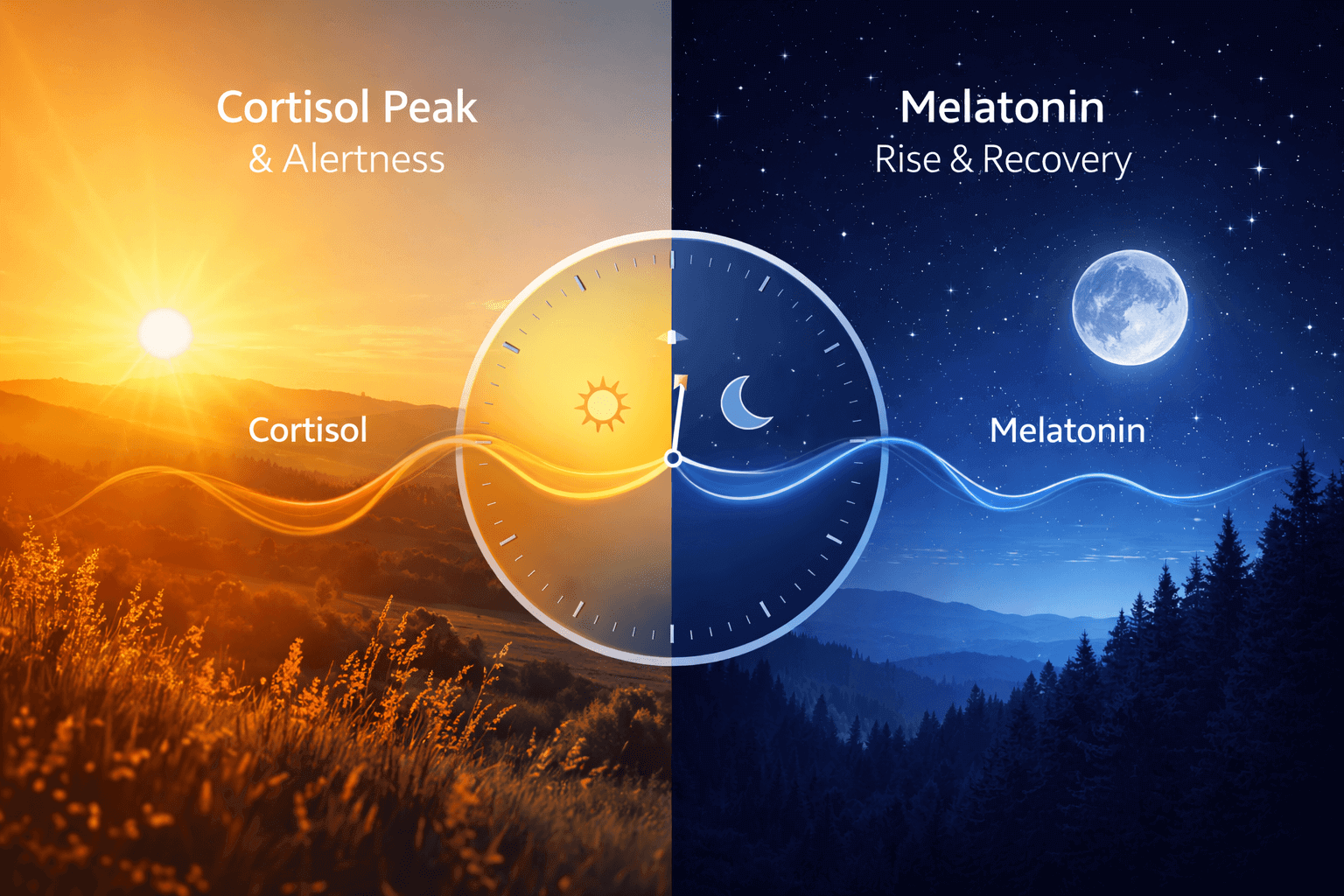
In the delicate architecture of human biology, two hormones dictate the quality of our existence: Cortisol and Melatonin. Often described as the “Sun and Moon” of our internal clock, these chemical messengers operate in an inverse relationship known as the circadian rhythm. When this rhythm is synchronized, we experience peak alertness by day and profound recovery by night. However, modern lifestyle stressors have given rise to the “Tired but Wired” phenomenon—a physiological state where the cortisol-melatonin axis is inverted.
🔥 Expert Summary: The Hormonal Switch
- Antagonistic Relationship: Cortisol (the stress hormone) and Melatonin (the sleep hormone) must work in opposition; high evening cortisol directly inhibits melatonin synthesis.
- Circadian Disruption: Chronic exposure to blue light and late-night stressors causes a “phase shift,” leading to metabolic dysfunction and cognitive decline.
- Restoration Goal: Recovery depends on lowering the core body temperature and suppressing sympathetic nervous system activity 2 hours before sleep.
Table of Contents
What Is the Cortisol-Melatonin Axis?
The Suprachiasmatic Nucleus (SCN) in the brain acts as the master conductor. In the morning, light triggers the release of cortisol, which increases blood glucose and heart rate to prepare us for the day. Conversely, as light fades, the pineal gland converts serotonin into melatonin. This transition is critical for autophagy—the body’s cellular cleanup process.
Hormonal Secretion Patterns
| Time of Day | Dominant Hormone | Biological Goal |
|---|---|---|
| 06:00 – 09:00 | Cortisol (Peak) | Wakefulness & Gluconeogenesis |
| 12:00 – 15:00 | Balanced | Metabolic Activity & Focus |
| 21:00 – 23:00 | Melatonin (Rising) | Immune Repair & Body Temp Drop |
Health Impacts of Hormonal Imbalance
Metabolic & Cardiovascular Risks
When cortisol remains high at night, it forces the liver to continue releasing glucose into the bloodstream. This chronic hyperglycemia during sleep is a significant risk factor for Type 2 Diabetes. Furthermore, elevated nocturnal cortisol prevents the heart rate from dropping, leading to long-term hypertension.
Cognitive Decline & Brain Health
Melatonin is one of the most potent intracellular antioxidants. Without its presence, the brain cannot effectively clear metabolic waste via the glymphatic system. This “biological sludge” is linked to neurodegenerative conditions and brain fog.
Essential Resources & Toolkits (Link Magnet)
📊 Scientific Insights Box: The 50% Rule
Clinical studies indicate that exposure to standard room lighting (approx. 200 lux) suppresses melatonin levels by more than 50% in most adults. Conversely, just 30 minutes of morning sunlight can advance melatonin onset by nearly 2 hours in the evening.
(Source: Harvard Medical School / Clinical Endocrinology)
📥 Download: The 7-Day Circadian Reset Checklist (PDF)
Get our evidence-based protocol to lower evening cortisol and trigger natural melatonin production. Includes:
• Light exposure schedule • Optimal nutrient timing • Temperature regulation hacks.
BUTTON: Downl 7-Day_Circadian_Reset_Checklist
Frequently Asked Questions
Can supplements fix a cortisol-melatonin imbalance?
While supplements like Ashwagandha (for cortisol) or Melatonin can provide temporary relief, they do not address the root cause of circadian misalignment. Long-term balance requires behavioral changes, specifically light management and stress reduction, to retrain the brain’s internal clock without creating dependency on exogenous substances.
What is the “Cortisol Awakening Response” (CAR)?
The CAR is a sharp increase in cortisol levels (up to 50-75%) within the first 30-45 minutes after waking. This is a sign of a healthy adrenal system and a well-functioning circadian rhythm. If you feel groggy for hours after waking, your CAR may be blunted, indicating a need for morning light exposure.
Read More: Explore our guides on The 10-3-2-1-0 Sleep Method and Nighttime Habits for further optimization.