
Fatty Liver: The Evidence-Based Guide to What It Is and What Actually Helps
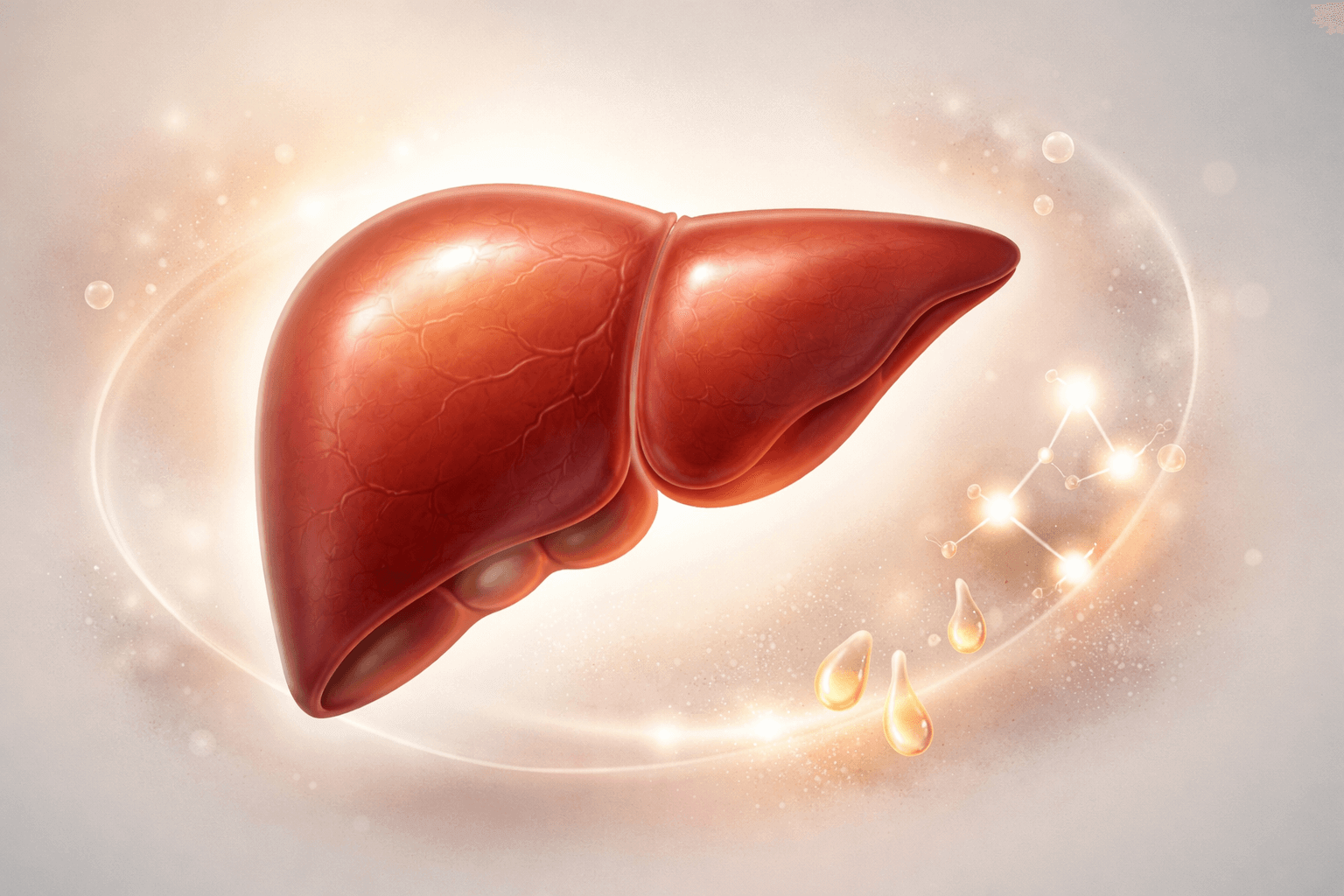
the quiet liver problem that often has no symptoms
Many people discover it by chance, after a routine ultrasound or blood test.
This is precisely why it matters.
The liver acts as a metabolic control center, helping process fats, sugars, and toxins,
while also playing a key role in overall energy balance.When excess fat accumulates inside liver cells, the liver can become inflamed and less efficient over time.
In some individuals, that inflammation may gradually progress to scarring.
However, the most important point is this.
For many adults, especially after fifty, fatty liver is closely linked to lifestyle and metabolic health.
That means it is often a signal to adjust daily habits, not a reason for panic.This guide explains what fatty liver is, why it develops, what scientific research shows can help,
and how to approach diet and daily habits correctly.If you want to build a strong internal cluster for this topic, you can also explore:
liver detox myths and facts,
how sugar affects triglycerides,
and walking after fifty for metabolic health.
what is fatty liver
Fatty liver is a condition in which excess fat accumulates within the liver.
Clinically, it is often identified when fat makes up more than a small fraction of the liver’s weight.
Today, many experts use terminology that highlights the metabolic roots of the condition,
because fatty liver frequently appears alongside insulin resistance, abdominal fat,
elevated triglycerides, and higher blood sugar.
a short history and why modern life matters
Historically, fatty liver was relatively uncommon outside of heavy alcohol use or severe malnutrition.
In modern societies, it has become increasingly common due to chronic calorie surplus,
reduced daily movement, and widespread consumption of ultra-processed foods.
Importantly, fatty liver is not limited to people with obesity.
Some individuals with a normal body weight may also develop it, particularly when insulin resistance
or genetic predisposition is present.
alcohol-related vs metabolism-related fatty liver
Two broad patterns are often discussed.
One is alcohol-related fatty liver, where alcohol intake is the primary driver.
The other is metabolism-related fatty liver, where insulin resistance and metabolic stress are central.
In practice, these patterns can overlap.
Even moderate alcohol intake may worsen liver fat accumulation in someone who already has metabolic risk factors.
For this reason, a personalized approach is always more accurate than rigid labels.
nutritional profile
Fatty liver is not a food, but nutrition strongly influences how it develops and improves.
The liver responds continuously to what arrives in the bloodstream, day after day.
key dietary patterns linked to liver fat
Research consistently links higher liver fat to dietary patterns that include frequent added sugars,
especially sugary drinks, large portions of refined carbohydrates, low fiber intake,
and regular consumption of ultra-processed snacks.
Excess alcohol intake further amplifies these effects, particularly when combined with existing metabolic stress.
For a dedicated guide you can internally link to:
alcohol and liver health.
In contrast, dietary patterns associated with better liver outcomes often emphasize minimally processed foods,
higher fiber intake from vegetables, legumes, and whole grains, adequate protein to support muscle mass,
and healthier fats when they replace refined carbohydrates rather than add extra calories.
what makes the functional difference
From a functional perspective, the liver benefits most from habits that reduce metabolic pressure.
This includes lowering rapid glucose spikes, improving insulin sensitivity,
supporting muscle mass, and reducing chronic inflammatory load through food quality.
In practice, the greatest benefit rarely comes from a single food.
Instead, it comes from a pattern that the liver can manage calmly and consistently.
scientifically proven health benefits
weight loss, even modest, can reduce liver fat
Scientific studies consistently show that even modest weight loss can reduce liver fat
and improve liver enzyme levels in many individuals.
The method matters.
Extreme crash dieting can backfire by reducing muscle mass and increasing the risk of rebound weight gain.
Gradual progress supported by adequate protein, fiber, and daily movement tends to be far more sustainable
and protective for liver health.
If you publish a supporting article, link here:
weight loss strategies for fatty liver.
movement is not optional for liver health
Physical activity improves insulin sensitivity, lowers triglycerides,
and changes how the body stores and uses fat.
Even in the absence of dramatic weight loss, regular movement helps the liver manage incoming energy more effectively.
Walking, in particular, is often underestimated.
However, when practiced consistently, it becomes a powerful metabolic signal.
See also:
walking and insulin sensitivity.
reducing added sugar is one of the fastest wins
Added sugars, especially in liquid form, can drive liver fat accumulation through pathways
that convert excess carbohydrate into fat.
This is why reducing sugary drinks often leads to rapid improvements in triglyceride levels
and supports gradual liver fat reduction.
more proven benefits when fatty liver improves
liver enzymes and inflammation markers
As liver fat decreases, many people experience reductions in liver enzymes such as ALT and AST.
While these markers are not perfect on their own, they often reflect reduced liver stress
when combined with broader metabolic improvements.
insulin sensitivity and blood sugar control
Improved liver fat balance is frequently accompanied by better insulin sensitivity.
This matters because the liver plays a central role in regulating blood glucose,
especially between meals and overnight.
Better insulin sensitivity reduces constant metabolic pressure
and contributes to steadier energy levels throughout the day.
triglycerides and lipid balance
Fatty liver often appears alongside elevated triglycerides.
As dietary quality improves and movement becomes consistent, triglyceride levels commonly decline.
This shift is a clear signal that the liver is handling energy more efficiently,
with positive effects on overall cardiovascular risk.
If you want a related internal article, link here:
the triglyceride-to-hdl ratio explained simply.
how to use diet correctly for fatty liver
portion structure and meal rhythm
Spacing meals evenly and avoiding constant grazing gives the liver time to process nutrients effectively.
For many adults, three balanced meals with minimal snacking support more stable insulin signaling
and reduce continuous fat production in the liver.
protein intake and muscle preservation
Adequate protein intake becomes increasingly important after fifty.
Muscle tissue acts as a major sink for glucose, reducing metabolic burden on the liver.
Maintaining muscle mass through sufficient protein and regular movement
supports liver health indirectly but powerfully.
carbohydrates and fats in context
Carbohydrates are not inherently harmful, but quality and form matter.
Fiber-rich sources are processed more slowly and lead to gentler glucose responses.
Healthy fats can support liver health when they replace refined carbohydrates
rather than simply increasing total calorie intake.
A relevant internal link you can add later:
healthy fats explained.
alcohol and fatty liver: the honest middle ground
Alcohol deserves careful consideration.
Even when fatty liver is primarily metabolic, alcohol can amplify liver stress.
For some individuals, complete avoidance may be necessary.
For others, reducing frequency and quantity can already lead to measurable improvement.
who should be especially careful
people with type two diabetes or prediabetes
Because insulin resistance is central to fatty liver, individuals with impaired glucose control
benefit from coordinated, gradual lifestyle changes rather than rapid interventions.
those considering rapid weight loss
Rapid weight loss can temporarily increase liver stress and gallstone risk.
A steady approach that preserves muscle mass is safer and more effective.
medication use and liver function
Many medications are processed by the liver.
Dietary changes, supplements, or alcohol adjustments should be discussed with a healthcare professional
when medications are involved.
common mistakes that slow progress
- chasing detox products instead of changing daily habits
- cutting calories too aggressively and losing muscle mass
- focusing on single foods rather than overall patterns
- ignoring movement because diet feels sufficient
- expecting rapid results and stopping too early
final takeaway
Fatty liver is not a moral failure and not a life sentence.
For many adults, it is a signal that the metabolic system is overloaded, not broken.
When daily habits reduce that load, the liver often regains function and resilience.
The most effective strategy is calm, evidence-based, and consistent.
Support insulin sensitivity, preserve muscle, reduce added sugars, move regularly,
and allow time for recovery.
This approach does more for liver health than any detox promise ever could.
external references
For readers who want authoritative background sources, here are trusted, non-affiliate references:
National Institute of Diabetes and Digestive and Kidney Diseases (NIDDK): Fatty Liver Disease
Mayo Clinic: Fatty Liver Disease
Harvard T.H. Chan School of Public Health: Fatty Liver Disease
Educational content only. Not medical advice. If you have symptoms, abnormal labs, or a diagnosis of fatty liver,
work with a qualified healthcare professional for personalized guidance.


