
Gentle Exercise at Home: Simple Routine After 40
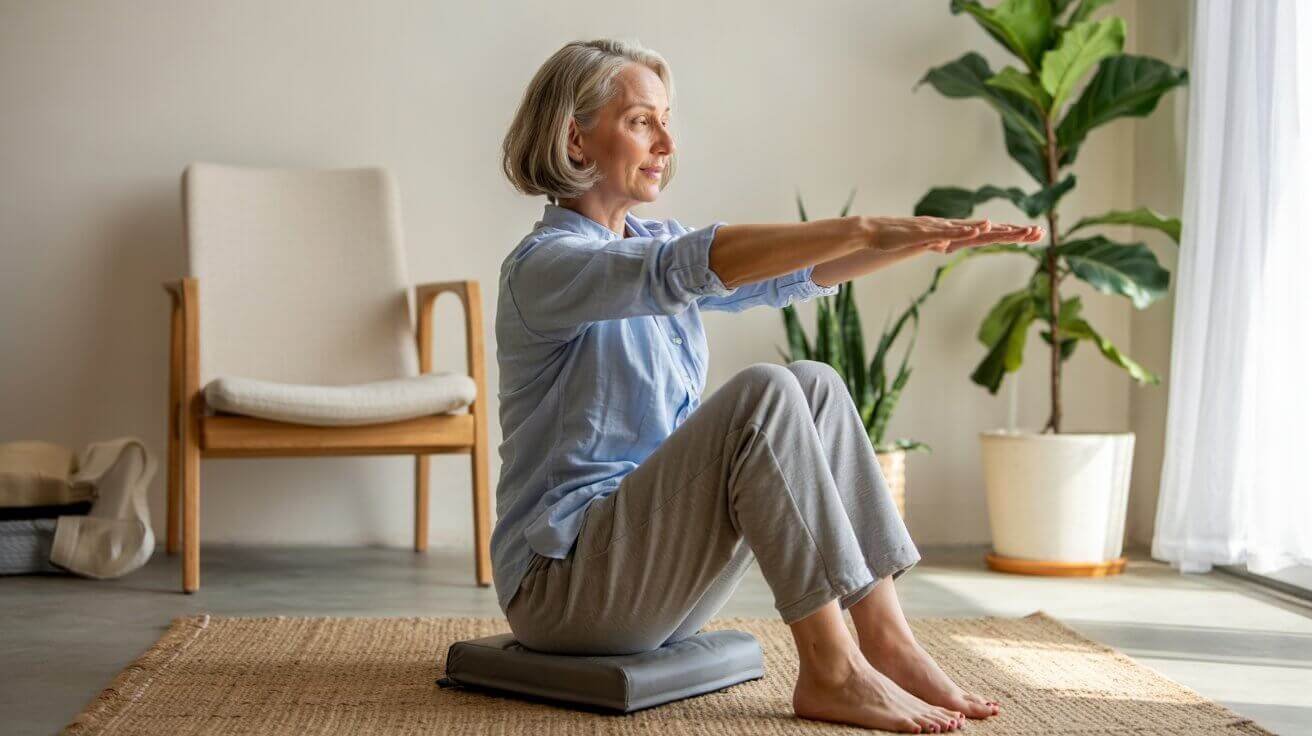
Gentle exercise at home is one of the fastest ways to protect mobility without “becoming a gym person.” It’s not about sweating until you collapse. It’s about keeping joints moving, muscles awake, and balance sharp enough to handle real life: stairs, groceries, uneven sidewalks, getting up from the couch, and catching yourself when you misstep.
For many adults over forty, the biggest threat to strength and stability isn’t age itself. It’s the quiet drift toward less movement—more sitting, fewer challenging positions, fewer times you get down to the floor and back up. The good news: you can reverse a surprising amount of that drift with a short, consistent routine that feels safe and doable.
This guide is designed for normal homes, normal bodies, and normal schedules. You’ll learn what “gentle” actually means, which exercises give the biggest return for mobility, and how to build a simple plan you can repeat for years.
gentle exercise at home: the safest way to rebuild “everyday strength”
“Gentle” is not the same as “easy.” Gentle means:
- low impact: minimal jumping or pounding on joints
- controlled: slow, deliberate movement instead of momentum
- scalable: you can make it easier or harder without changing the entire workout
- repeatable: you can do it consistently without needing willpower battles
Think of it as mobility insurance. When you practice controlled movement often, your body keeps a “reserve” of strength, coordination, and joint range. That reserve is what makes daily life feel lighter—and what helps prevent small stumbles from turning into big problems.
If you’ve been sitting a lot lately, that reserve can shrink without you noticing. A helpful companion read is our guide on harmful habits that quietly reduce mobility over time.
what gentle exercise actually trains (the four systems that protect you)
A smart home routine isn’t random stretching. It trains four systems that matter most for staying steady and capable:
one: lower-body strength
Strong legs and hips make it easier to stand up, climb stairs, and stabilize your knees and back. This is the foundation of “I can handle my day.”
two: balance and foot control
Balance is not just “core.” It’s your feet, ankles, hips, eyes, and nervous system working together. Gentle balance drills build confidence and reduce the fear of movement.
three: joint mobility
Hips, ankles, and upper back mobility influence how safely you move. If ankles are stiff, knees take more stress. If hips are tight, the back compensates.
four: movement quality
When you move slowly and with control, you train coordination. This matters because most injuries don’t happen during planned exercise—they happen during rushed, awkward everyday movement.
evidence-informed benefits you can expect (without overpromising)
Gentle exercise is not a cure-all. But a consistent routine that includes strength, balance, and mobility is associated with meaningful functional improvements—especially when you’ve been less active. Over time, many people notice:
- easier chair stands and stairs (less “heavy legs” feeling)
- steadier walking on uneven surfaces
- less stiffness in hips, ankles, and back
- better confidence when turning, carrying things, or moving quickly
- more daily activity because movement feels less costly
Mechanistically, this makes sense: muscle supports joints, balance training improves stepping control, and mobility work restores usable range. The combined effect is better “movement resilience.”
And because consistency is everything, lifestyle supports matter too—especially sleep and recovery. If you want the simplest way to make training feel easier, explore nighttime habits that support better recovery.
the gentle at-home framework (how to choose the right level)
Before exercises, lock in the rules that keep gentle training safe and effective:
- use the “two-point” rule: on a ten-point effort scale, most sets should feel like a six to seven. You’re working, but you could do a little more.
- pain is information: muscle effort is normal; sharp joint pain is a cue to modify range, tempo, or exercise choice.
- train near support: for balance drills, use a wall or countertop. The goal is practice, not risk.
- progress slowly: add reps first, then add small resistance (like a backpack or light dumbbells).
If you’re starting from very low activity, you will progress faster than you expect—because your nervous system “relearns” movement quickly when practice is consistent.
the best gentle exercises at home (high return, low complexity)
You don’t need a long list. You need a few patterns that cover daily life. Below are the best options to start with, and why they matter.
sit-to-stand (chair rises)
Why it works: trains the exact pattern of getting up from a chair or toilet. It strengthens thighs and hips in a joint-friendly way.
- how: sit tall, feet under knees, stand up smoothly, sit down slowly.
- make it easier: use a higher chair or light hand support on thighs.
- make it harder: slow the lowering to three seconds, or hold a light weight close to the chest.
supported step-ups (low step)
Why it works: stairs are real life. Step-ups train single-leg strength and balance together.
- how: step up on a low stable step, then step down slowly.
- make it safer: hold a railing or countertop lightly.
- progress: add reps, then increase step height slightly.
glute bridge (hip strength)
Why it works: strengthens glutes and posterior chain, which often reduces “knee-dominant” movement and supports the back.
- how: lie on your back, knees bent, lift hips, pause, lower slowly.
- progress: add a pause at the top, or place a light weight over the hips.
calf raises (ankle strength)
Why it works: ankles are your first balance correction. Strong calves support steadier walking and quicker recovery steps.
- how: hold a wall, rise onto toes, lower slowly.
- progress: single-leg calf raises (with support).
tandem stance and heel-to-toe walking (balance basics)
Why it works: trains narrow-base stability and walking control, which carries over to daily life.
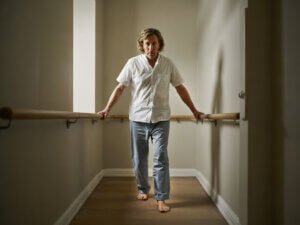
- how: stand heel-to-toe near a wall for twenty to thirty seconds; then try heel-to-toe walking along the wall.
- progress: reduce hand contact from full hand → fingertips → hovering hand.
marching in place (coordination)
Why it works: reinforces single-leg control safely and improves stepping confidence.
- how: march slowly near support, lift knees comfortably, keep posture tall.
- progress: slow it down and pause briefly at the top of each march.
who should be careful (and how to keep it safe)
Gentle exercise is usually adaptable, but extra caution is wise if you have:
- frequent dizziness or near-fainting when standing
- recent surgery or an acute injury
- significant neuropathy affecting the feet
- unexplained joint swelling, locking, or giving-way
- chest pain or unusual shortness of breath with activity
In these cases, a clinician or physical therapist can help personalize your starting level. For everyone else: start supported, choose a safe environment, and keep the effort moderate.
the complete gentle exercise plan (no equipment, no confusion)
The most sustainable “gentle exercise at home” plan is built around two pieces:
- a short daily routine (ten to twelve minutes) for mobility + balance
- two strength sessions per week (fifteen to twenty-five minutes) to keep legs, hips, and posture reliable
This mirrors what major public health guidance emphasizes for older adults: regular activity across the week that includes muscle strengthening and balance-focused work. CDC older adult activity overview
the ten to twelve minute daily routine (mobility + balance)
Do this routine five or six days per week. Train near a wall or sturdy countertop. Use light fingertip support whenever you need it. The goal is practice, not risk.
one: breath + posture reset (one minute)
Stand tall. Inhale through the nose, exhale slowly. Feel your ribs drop and your pelvis stack under you. This “resets” posture before movement, especially if you’ve been sitting.
two: ankle mobility rocks (one minute)
Hold the counter. Step one foot back. Gently bend the front knee forward over the toes, then return. Ten slow reps each side. This supports balance because ankles are your first correction point.
three: hip hinge practice (one minute)
Hands on hips. Push hips back slightly like you’re closing a car door, then stand tall. Ten slow reps. This teaches safer bending mechanics for daily life.
four: sit-to-stand practice (two minutes)
Do two sets of five to eight reps. Stand up smoothly. Sit down slowly (count to three). Use a higher chair if needed. This is one of the highest-return movements for everyday independence.
five: tandem stance (two minutes)
Stand heel-to-toe near a wall. Hold twenty to thirty seconds, switch feet, repeat. Keep eyes forward. Light fingertip support is allowed.
six: heel-to-toe walk (two minutes)
Along a wall, take six to ten slow steps heel-toe. Turn safely and repeat. This drill directly improves walking control and steadiness. NHS balance exercises
seven: marching with pauses (two to three minutes)
March in place near support. Pause one second at the top of each march. Do two rounds of thirty to forty seconds. This trains single-leg control in a very safe way.
Simple rule: if the routine feels too easy, slow it down and reduce support slightly. If it feels too hard, use more support and shorten the sets.
two gentle strength sessions per week (fifteen to twenty-five minutes)
Strength is what makes balance usable. Without enough leg and hip strength, the nervous system “knows what to do” but the body can’t execute fast, controlled steps. The National Institute on Aging highlights strength training as a practical tool that may support healthier function as we age. NIA strength training overview
Pick two non-consecutive days (for example, Tuesday and Friday). Warm up with one minute of easy marching and a few slow chair stands.
session a (foundation)
- sit-to-stand: three sets of eight to twelve reps
- glute bridge: three sets of eight to twelve reps
- supported step-ups (low step): two to three sets of six to ten reps per side
- calf raises (supported): two to three sets of ten to fifteen reps
session b (single-leg control and stability)
- supported split squat (small range): three sets of six to ten reps per side
- side steps (band optional): two to three sets of ten to fifteen steps each way
- slow step-down (small range): two sets of five to eight reps per side
- carry practice (optional): hold a light object and walk slowly for thirty to forty seconds, two rounds
Effort target: most sets should feel like a six to seven out of ten. You are working, but you could do a couple more reps with good form.
a four-week progression that stays gentle
Progress should feel calm and predictable. Use this simple approach:
week one: learn the movements
- use more support
- choose higher chair height and lower step height
- do fewer reps, move slowly
week two: add a little volume
- add one to two reps per set on chair stands and bridges
- add one extra round of heel-to-toe walking
week three: increase control, not intensity
- slow the lowering phase (three seconds) on sit-to-stand and step-downs
- reduce support from full hand to fingertips where safe
week four: add a real-life challenge
- during heel-to-toe walking, add gentle head turns (only if stable)
- carry a light object for short distances with tall posture
After four weeks, repeat the cycle with slightly more difficulty (a slightly lower chair, a slightly higher step, or a tiny bit more resistance like a backpack).
common problems and the best modifications
if your knees feel irritated
- use a higher chair and a smaller step
- keep reps slow and controlled
- shift some work toward glute bridges and hip hinges (often knee-friendly)
if your back feels tight
- keep chest tall during sit-to-stand
- avoid bending with a rounded spine; use the hip hinge pattern
- keep the daily routine shorter but more frequent
if you feel dizzy standing up
- stand up slowly, breathe, and pause before walking
- hydrate and avoid rushing from bed to standing
- if dizziness is frequent, consider medical guidance before progressing
For broader “movement consistency” support, small lifestyle habits often make the difference. See small lifestyle changes that support training without adding stress.
frequently asked questions (evidence-based)
how often should i do gentle exercise at home?
Most people do well with short daily mobility and balance practice, plus two days per week of strength training. This builds skill through repetition while giving your muscles time to recover.
is stretching enough if i feel stiff?
Stretching can help, but many people feel better when stretching is paired with strength and controlled movement. Often, “stiffness” improves when joints regain usable range and muscles regain support around the joint.
what if i only have five minutes?
Do five minutes daily rather than thirty minutes once in a while. A simple five-minute option is: one minute marching, two minutes chair stands, two minutes tandem stance or heel-to-toe walking near a wall.
when should i stop and get help?
Stop and seek guidance if you have chest pain, new neurological symptoms, repeated near-fainting, sharp worsening joint pain, or frequent falls. Those situations deserve individualized evaluation.
final takeaway
Gentle exercise at home is one of the most realistic ways to protect strength, balance, and mobility after forty—because it’s repeatable. If you do a short daily routine for mobility and balance and add two simple strength sessions per week, you’re training the exact skills that keep daily life easy: standing up, stepping safely, and staying steady.
Start supported. Move slowly. Progress by adding control first, then small difficulty. Over time, the biggest change is not just in your body—it’s in your confidence moving through the day.
Educational note: This content is for general information and does not replace medical advice. If you have frequent dizziness, recent falls, severe neuropathy, or symptoms with exertion, consider speaking with a qualified clinician before starting a new routine.