
Best Foods for Kidney Repair: A Medical Guide to Renal Health
✔
Medical Fact-Check: Verified against Clinical Practice Guidelines (Harvard & NIH) .
The human kidneys are sophisticated biological filtration systems, processing approximately 200 quarts of blood daily to eliminate metabolic waste and maintain osmotic balance. However, the modern prevalence of metabolic syndrome and hypertension has placed an unprecedented burden on renal structures, specifically the glomerulus and tubules. While “repairing” chronic nephron damage is a complex clinical challenge, optimizing renal hemodynamics through targeted nutrition is a proven strategy for preserving remaining function. According to the National Institutes of Health (NIH), understanding how these organs filter waste is the first step toward preventing chronic decline. This guide explores the pharmacokinetics of renal-protective nutrients, the critical “Gut-Kidney Axis,” and the specific superfoods that support glomerular filtration rate (GFR) stability.
Expert Summary
- Hyperfiltration Control: Minimizing inorganic phosphorus and excessive sodium is critical to prevent compensatory hyperfiltration in surviving nephrons.
- Endothelial Protection: Anthocyanins and organosulfur compounds mitigate oxidative stress within the renal parenchyma.
- The Gut-Kidney Axis: Emerging evidence suggests that modulating gut microbiota can reduce the systemic load of uremic toxins.
⚠️ Safety Alert: Individuals diagnosed with Stage 4 or 5 Chronic Kidney Disease (CKD) must strictly monitor potassium and phosphorus intake. Always consult a renal dietitian before implementing high-potassium “superfoods.”
What Is Renal Health? Biological Role and Hemodynamics
The kidneys serve as the primary homeostatic regulators of the internal environment. Beyond filtration, they manage erythropoiesis (red blood cell production), systemic blood pressure via the Renin-Angiotensin-Aldosterone System (RAAS), and the final activation of Vitamin D.
[INSERT INFOGRAPHIC: Detailed Anatomy of a Nephron and the Filtration Process]
When discussing “Kidney Repair,” we are referring to the mitigation of oxidative stress and interstitial fibrosis. The nephron—the functional unit of the kidney—is highly sensitive to chronic inflammation. By introducing specific phytochemicals, we can modulate cellular pathways like SIRT1 and Nrf2, which enhance the resilience of the glomerular basement membrane against damage from high glucose and hypertension.
Nutritional Matrix: Key Compounds for Renal Protection
To optimize renal function, one must look at the biochemical profile of foods. The focus is on low-acid-ash proteins and high-antioxidant density to reduce the net acid load on the kidneys.
| Nutrient Category | Key Compound | Biological Impact |
|---|---|---|
| Anthocyanins | Cyanidin-3-glucoside | Reduces oxidative damage in renal tubules. |
| Organosulfurs | Allicin | Mitigates heavy metal nephrotoxicity. |
| Omega-3s | EPA / DHA | Reduces proteinuria and vascular resistance. |
Scientifically Proven Health Benefits: The Power of Targeted Superfoods
1. Cardiovascular-Renal Synergy (Berries & Fatty Fish)
The kidneys are essentially a dense cluster of blood vessels. Research curated by Harvard Health suggests that berries improve endothelial nitric oxide synthase (eNOS) activity, ensuring that the renal microvasculature remains patent. This synergy is vital for maintaining blood circulation within the nephrons.
2. Alkalizing the Internal Environment (Cruciferous Vegetables)
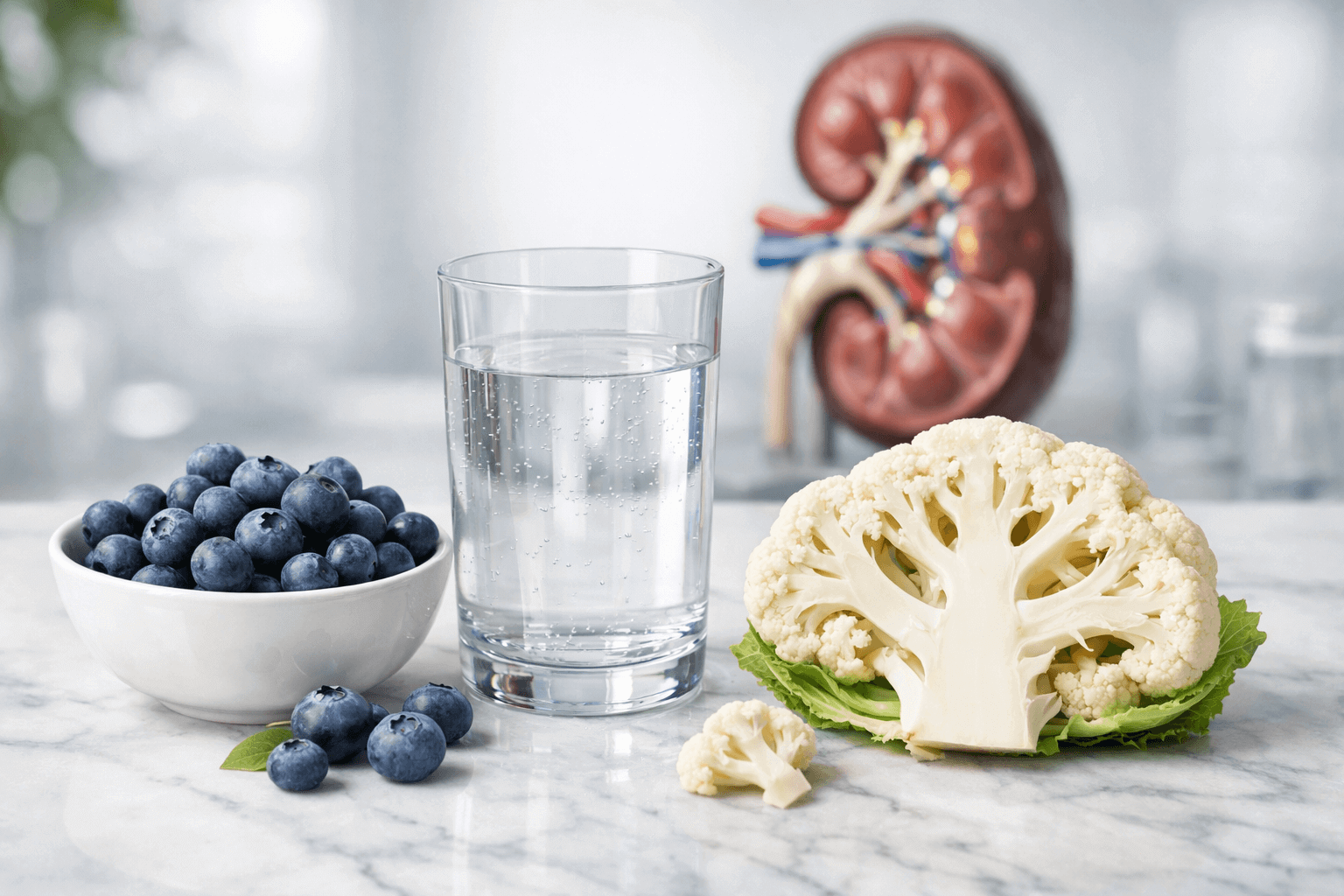
A high dietary acid load (DAL) is a known risk factor for CKD progression. Vegetables like cauliflower and cabbage act as alkaline buffers. They are relatively low in potassium, making them safe “superfoods” for reducing systemic inflammation without taxing the kidneys.
The “Silent Killers”: Hidden Dietary Compounds Destroying Nephrons
Identifying what to eliminate is as vital as what to add. Modern food processing has introduced “anti-nutrients” that significantly accelerate renal aging.
1. Inorganic Phosphorus Additives
The National Kidney Foundation warns that inorganic phosphorus additives (found in sodas and processed meats) are absorbed at a rate of nearly 100%. This induces a spike in FGF23, a hormone linked to vascular calcification and rapid kidney decline.
| Hidden Ingredient | Source | Renal Damage Mechanism |
|---|---|---|
| Sodium Phosphate | Canned soups, Cola | Vascular calcification and nephron strain. |
| High Fructose Corn Syrup | Sweetened snacks | Uric acid elevation and crystal formation. |
The Gut-Kidney Axis: Microbiome & Renal Filtration
One of the most innovative areas of renal research is the Gut-Kidney Axis. A study published in PubMed / National Library of Medicine highlights how uremic toxins produced by gut bacteria—such as Indoxyl Sulfate—leak into the blood when the intestinal barrier is compromised.
[INSERT INFOGRAPHIC: The Gut-Kidney Axis – Mechanism of Uremic Toxin Translocation]
Supporting gut health with specific fibers acts as a “biologic filter,” reducing the toxic load before it reaches the renal artery. This is a crucial component of a natural detox strategy for the kidneys.
Bioavailability & Practical Usage Guide
| Food / Nutrient | Ideal Timing | Optimal Pairing | Daily Target |
|---|---|---|---|
| Garlic (Allicin) | With Evening Meal | Crushed (wait 10 min) | 1-2 Cloves |
| Olive Oil (MUFAs) | Daily use | Raw over vegetables | 1-2 tbsp |
Safety, Side Effects & Contraindications
Renal nutrition is highly individualized. It is mandatory to consult with healthcare professionals to adapt these guidelines to your specific GFR levels.
- Potassium Sensitivity: High-potassium foods (bananas, potatoes) can lead to hyperkalemia in advanced CKD.
- Oxalate Stones: Pair high-oxalate foods with calcium-rich sources to prevent stone formation.
- Protein Loading: Focus on High Biological Value (HBV) proteins like egg whites to minimize nitrogenous waste.
Frequently Asked Questions (Snippet Optimized)
What are the best foods for kidney repair?
The best foods for kidney repair include blueberries, red grapes, garlic, and egg whites, as they provide high antioxidant support with a low renal workload. These foods contain specific phytochemicals like anthocyanins and allicin that reduce oxidative stress and inflammation in the nephrons.
How can I improve my kidney function naturally?
To improve kidney function naturally, focus on reducing sodium and inorganic phosphorus intake while maintaining optimal hydration and an alkaline-rich diet. Incorporating cruciferous vegetables and managing blood sugar levels are critical steps to prevent glomerular hyperfiltration.
Is lemon water good for the kidneys?
Lemon water is beneficial for kidney health because it contains citrate, which inhibits the crystallization of calcium oxalate—the most common component of kidney stones. Additionally, its alkalizing effect once metabolized helps reduce the net acid load on the renal tubules.
The Final Verdict
Preserving kidney function is a multi-faceted approach involving hemodynamic control and microbiome management. While nephrons do not regenerate, their longevity can be maintained by shifting toward a “renal-protective” diet that prioritizes bioavailability and minimizes toxic additives.
Actionable Next Steps:
- Audit Your Pantry: Eliminate foods containing “Phosphate” in the ingredients.
- Request a Cystatin C Test: For a more accurate measure of your GFR.
- Prioritize Hydration: Aim for 2 liters of filtered water daily to facilitate toxin clearance.