Insomnia: Causes & What Actually Helps (Science-Based)
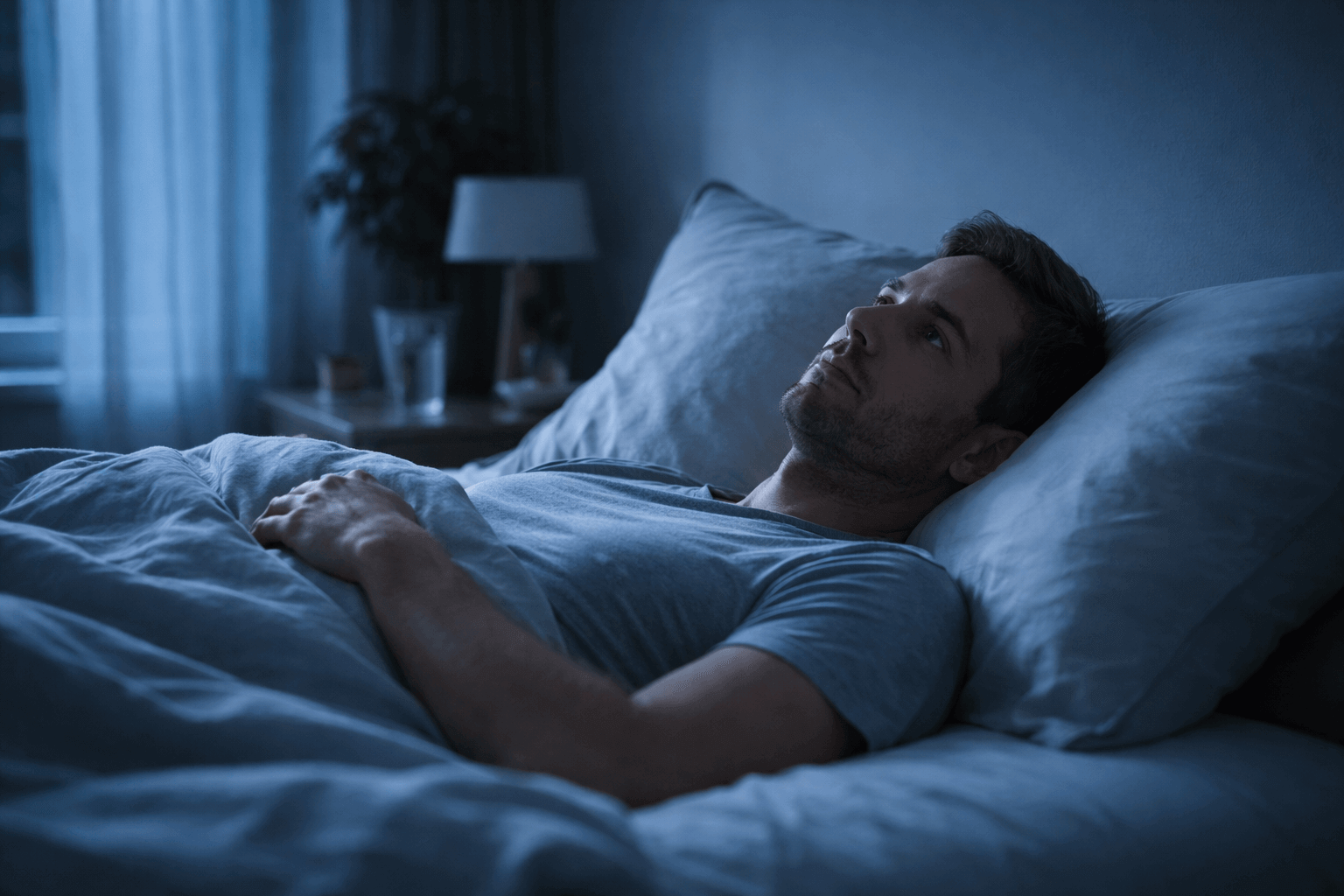
For many adults today, that rhythm has quietly broken. Insomnia is not simply “a bad night.”
It is a persistent difficulty falling asleep, staying asleep, or waking too early, despite having
enough time and a reasonable environment for sleep. And its effects can reach beyond next-day
tiredness, touching mood, focus, appetite regulation, and long-term cardiometabolic health.Modern life has created perfect conditions for insomnia: constant light exposure, irregular schedules,
late-night screens, and stress that keeps the nervous system on alert. The most useful way to approach
insomnia is not to “try harder,” but to understand what is keeping the brain awake—and use strategies
that help the body relearn sleep. This guide explains what insomnia is, why it becomes more common
after forty, and what science suggests may actually help, with practical steps and realistic expectations.
sleep recovery starts here: why insomnia feels so hard to fix
Insomnia often becomes a loop: a poor night triggers worry, worry increases arousal, arousal makes sleep
harder, and the cycle repeats. If you are building a broader recovery plan, you may also find value in
exploring our Sleep & Recovery hub for related topics on daily rhythms,
stress recovery, and sleep-supporting habits.
What Is Insomnia?
Clinically, insomnia involves difficulty falling asleep, difficulty staying asleep, or early morning awakening
with inability to return to sleep—along with daytime consequences such as fatigue, impaired concentration,
mood changes, or reduced quality of life. Importantly, insomnia is not defined by hours slept alone.
Two people can sleep the same number of hours and feel very different the next day. Insomnia is primarily
about sleep continuity, quality, and recovery.
Authoritative medical references describe insomnia as a common sleep disorder that can involve trouble
falling asleep, staying asleep, or both, leading to poor-quality sleep and daytime impairment.
For a clinical overview, see the U.S. National Library of Medicine’s MedlinePlus page on
insomnia.
acute vs chronic insomnia
Acute insomnia is short-term and often tied to a clear trigger such as stress, illness, travel,
or schedule disruption. It may resolve once the trigger fades—especially if sleep is not aggressively forced.
Chronic insomnia persists for three months or longer and commonly becomes self-sustaining.
Over time, the brain may associate the bed with alertness, frustration, or anxiety about sleep itself.
This learned “hyperarousal” is one reason chronic insomnia can linger even when life circumstances improve.
Nutritional and biological profile of insomnia
Insomnia is not a “nutrient deficiency” problem, but sleep regulation is influenced by biology that includes
neurotransmitters, circadian hormones, and metabolic signals. Research in sleep medicine consistently points
to three interacting systems:
- circadian timing (your internal body clock)
- sleep pressure (the drive that builds the longer you are awake)
- arousal systems (stress response and brain alertness)
When these systems drift out of alignment—due to stress, light exposure, irregular schedules, or medical
factors—sleep can become lighter, more fragmented, or delayed. The U.S. National Heart, Lung, and Blood Institute
(NHLBI) explains insomnia as difficulty falling asleep, staying asleep, or getting good quality sleep even when
conditions for sleep are adequate:
What is insomnia? (NHLBI).
Scientifically supported mechanisms and impacts
why the brain stays awake (hyperarousal)
Many people with insomnia describe feeling “tired but wired.” This often reflects increased stress-system signaling,
including higher evening sympathetic nervous system tone. Instead of downshifting into sleep, the brain remains
vigilant—especially if bedtime has become linked to worry or frustration.
circadian disruption
The body clock relies heavily on light exposure and consistent timing cues. Late-night bright light, screen use, irregular
meal timing, and shifting sleep schedules can delay circadian signals and push sleep later—without changing morning obligations.
sleep pressure mismatch
Sleep pressure builds with time awake. Napping late in the day, spending excessive time in bed, or sleeping in after a bad night
can reduce nighttime sleep pressure. The result can be longer time to fall asleep and more wakefulness in bed.
How to use evidence-based strategies correctly
The goal is not to force sleep. It is to remove the conditions that keep the brain alert and to rebuild strong, reliable sleep signals.
For many adults, combining structured behavioral treatment with smart daily timing is the most effective path forward.
cognitive behavioral therapy for insomnia (cbt-i)
CBT-I is widely recommended as first-line treatment for chronic insomnia. It is not “just talking.”
It is a structured program that targets the behaviors and beliefs that keep insomnia going.
Clinical resources from the Mayo Clinic note that doctors may recommend CBT for insomnia as part of treatment,
alongside addressing stress, medical conditions, or medications that contribute to poor sleep:
Insomnia: diagnosis & treatment (Mayo Clinic).
A helpful overview of CBT-I and why it’s effective is also discussed by Harvard Health Publishing:
CBT-I as a drug-free method for managing insomnia (Harvard Health).
the cbt-i components that matter most
- stimulus control:
retrains the brain to associate the bed with sleep, not wakefulness, scrolling, or worry. - sleep restriction (temporary and controlled):
reduces time in bed to rebuild sleep pressure, then gradually expands sleep as efficiency improves. - cognitive restructuring:
reduces catastrophic thoughts (“If I don’t sleep, tomorrow is ruined”) that amplify stress. - relaxation training:
teaches the nervous system to downshift before bedtime.
the sleep anchors with the biggest payoff
These are simple but powerful because they stabilize circadian timing and sleep pressure:
- consistent wake-up time (even after a poor night)
- morning daylight exposure (outdoor light is ideal)
- dimming lights in the evening and reducing bright screens close to bedtime
- avoid clock-watching (turn the clock away to reduce arousal)
caffeine and alcohol: common hidden drivers
Caffeine sensitivity often increases with age, and its effects can persist for many hours.
For people with insomnia, keeping caffeine earlier in the day is frequently helpful.
Alcohol can shorten the time it takes to fall asleep, but it often fragments sleep later in the night and can worsen early awakenings.
If your pattern is “fall asleep fine, wake at three a.m.,” evening alcohol is worth reassessing.
Who should be careful
Insomnia is common, but certain situations warrant extra caution and medical guidance rather than self-treatment alone:
- loud snoring, gasping, or witnessed breathing pauses (possible sleep apnea)
- restless legs symptoms or uncomfortable sensations that worsen at night
- significant depression, panic symptoms, or severe anxiety
- persistent insomnia paired with frequent falls or morning confusion
- regular use of sedating medications, especially in older adults
If insomnia is persistent or severe, reputable clinical guidance can help clarify causes and options.
Mayo Clinic’s overview of insomnia symptoms and causes can be a useful reference:
Insomnia: symptoms & causes (Mayo Clinic).
Frequently asked questions (evidence-based)
is it normal to sleep less as i get older?
Sleep often becomes lighter and more fragmented with age, but persistent insomnia is not inevitable and should not be dismissed as “just aging.”
Many midlife and older adults improve significantly with structured behavioral treatment and consistent daily rhythms.
can you function well on five hours of sleep?
A small minority may tolerate shorter sleep, but most adults show impaired concentration, mood stability, and metabolic regulation when sleep is
persistently short. How you feel and function matters as much as the number on the clock.
should i stay in bed if i can’t sleep?
Lying awake for long periods can reinforce the bed-wakefulness association. Stimulus control approaches often recommend getting out of bed briefly
and returning when sleepy, to rebuild the bed-as-sleep cue.
insomnia after forty and hormonal shifts
For many adults, insomnia doesn’t start dramatically. It emerges after forty, becomes more frequent, and recovery after a poor night feels slower.
Hormonal rhythms help explain why.
melatonin: the night signal weakens
Melatonin is less a “sleep switch” and more a biological “darkness signal.” After midlife, melatonin production commonly declines and can become more
vulnerable to light disruption. The result may be delayed sleep onset, more awakenings, and difficulty returning to sleep after waking.
cortisol: stress hormones may rise too late
Cortisol should peak in the morning and fall at night. In midlife, chronic stress and long-term pressure can shift this rhythm toward higher evening
arousal—fueling the “tired but wired” pattern.
sex hormones and sleep continuity
In women, perimenopause and menopause can bring fluctuating and declining estrogen and progesterone, affecting temperature regulation and sleep continuity.
In men, gradual testosterone decline is associated with lighter sleep and increased vulnerability to stress-related awakenings.
metabolic signals: insulin sensitivity changes
After forty, insulin sensitivity often declines. For some people, nighttime blood sugar swings can contribute to early-morning awakening or restless sleep,
especially when late meals, refined carbohydrates, or alcohol are common in the evening routine.
insomnia and heart health: what long-term studies actually show
Insomnia is often framed as a quality-of-life issue, but long-term research increasingly connects sleep health with cardiovascular health.
Major cardiovascular health frameworks now include sleep as a core pillar. The American Heart Association’s Life’s Essential Eight includes healthy sleep
as one of the key components of cardiovascular health:
Life’s Essential 8 (AHA scientific statement).
what cohort studies suggest (association, not absolute destiny)
Large observational studies and pooled analyses have repeatedly found that chronic insomnia symptoms are associated with higher risk of hypertension and
cardiovascular events over time. This does not mean insomnia guarantees heart disease. It does suggest that persistent sleep disruption often travels with
physiological and behavioral patterns that matter for long-term cardiovascular risk.
plausible pathways researchers discuss
- sympathetic overactivity: sustained “fight-or-flight” tone can keep nighttime heart rate and blood pressure higher than ideal
- inflammatory signaling: sleep disruption is associated with inflammation that may affect vascular function over time
- glucose regulation: poor sleep can worsen insulin sensitivity and appetite regulation, indirectly affecting cardiometabolic risk
- behavioral spillover: insomnia can lead to late caffeine, less activity, more alcohol use, and poorer food choices
a crucial nuance: screen for sleep apnea when appropriate
Sleep apnea is a major cardiovascular risk factor and can coexist with insomnia symptoms—especially after forty.
If you have loud snoring, choking/gasping, or marked daytime sleepiness, evaluation for sleep-disordered breathing is important.
If you are also working on blood pressure, lipids, or broader prevention habits, you may want to explore our
Heart & Circulation section, since sleep is now widely treated as part of heart-health strategy, not an afterthought.
Final Takeaway
Insomnia is not a personal weakness and not simply “overthinking.” It is a condition shaped by circadian timing, sleep pressure, stress physiology,
learned associations, and (after forty) shifting hormonal rhythms. The most effective solutions rarely come from forcing sleep. They come from rebuilding
reliable sleep signals and reducing the arousal that keeps the brain on alert.
For chronic insomnia, structured behavioral treatment such as CBT-I has the strongest evidence base, and consistent daily anchors (wake time and morning light)
often amplify results. If insomnia is persistent—especially if snoring, breathing pauses, severe mood symptoms, or frequent nighttime awakenings are present—
medical evaluation can help identify underlying contributors and guide safe care.
Medical note: This article is for education and does not replace personalized medical advice.
If insomnia is persistent, severe, or accompanied by concerning symptoms, consider speaking with a qualified health professional.